
History | The Early Years
The Founding of Stephanion Observatory
The Making of an Observatory
In Search of a Sky
Since antiquity, Greece has been a source of inspiration for the study of the universe and a cradle of astronomical thought. Yet, despite its clear skies and long tradition of observing the heavens, the country lacked a modern observatory dedicated to astrophysical research until the early 1960s. Initial efforts by the National Committee for Astronomy, established in 1957, to identify suitable locations for a modern observatory had stalled due to a lack of financial resources.
At the same time, Greece’s exceptionally clear skies began attracting the interest of astronomers from Western Europe. In early 1964, a four-member Dutch scientific mission led by Professor Adriaan Blaauw of the Kapteyn Astronomical Laboratory in Groningen visited Greece to investigate the possibility of establishing an observing station that would serve astronomers from all Dutch astronomical institutions. Blaauw was one of the most influential figures in twentieth-century European astronomy and would later serve as Director General of the European Southern Observatory (ESO).
Working closely with the National Committee for Astronomy and drawing upon climatological data, the astronomers identified the mountainous regions of Argolis and Corinthia as the most promising locations for a new observatory. A joint survey team was subsequently formed, consisting of Dr. Lysimachos N. Mavridis from Greece and Dr. Jan Borgman, Dr. J. de Kort, and Professor Dr. Anne B. Underhill from the Netherlands, to carry out detailed field investigations.
Two locations emerged as leading candidates: Arachnaio in Argolis and Stephani in Corinthia. While Arachnaio offered a higher elevation—an important advantage for reducing atmospheric absorption—Stephani proved superior in terms of accessibility. A dirt road approximately fifteen kilometres long connected the village to Chiliomodi, situated on the Athens–Corinth–Argos road and railway corridor. The road had originally been opened during the interwar period on the initiative of Prime Minister Panagis Tsaldaris to facilitate the transport of Stephani’s then renowned cheese products.
Thus, on a sunny spring day in 1964, the survey team arrived in Stephani by car. From there, they continued on foot to the summit of Psili Rachi (1,079 m), exploring the landscape and assessing the observing conditions that, only a few years later, would give rise to Greece’s first modern astronomical observatory.
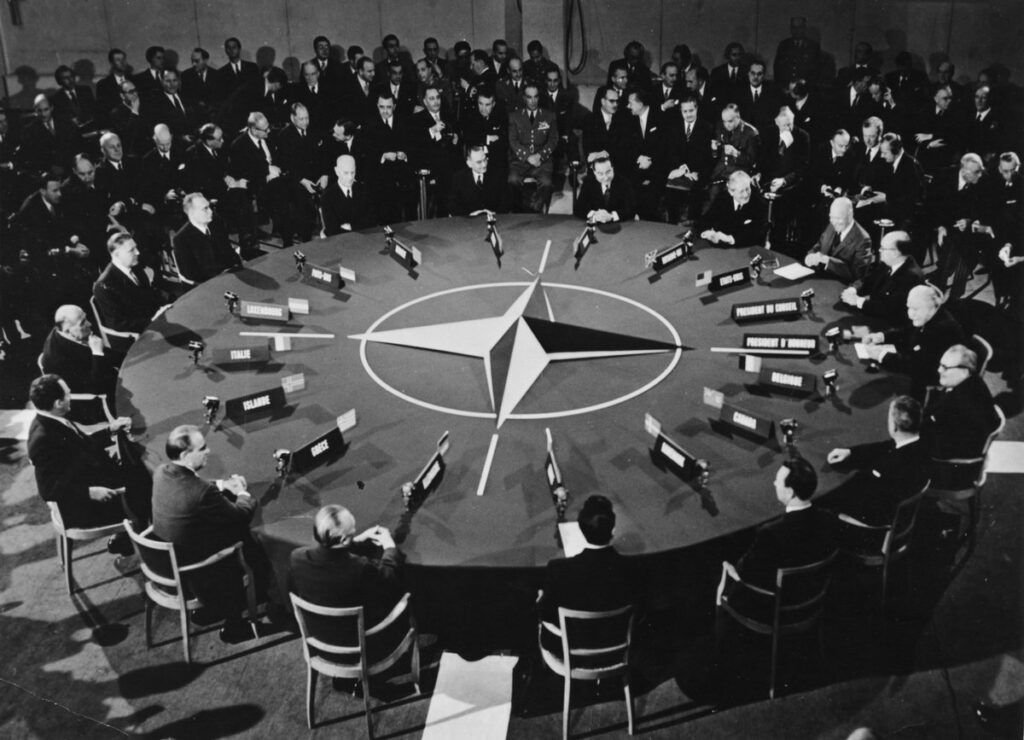
The grant from nato’s science committee
The International Grant That Laid the Foundations
In February 1966, a decisive step was taken towards the creation of Stephanion Observatory and the advancement of modern Greek astronomy. Following the support and advocacy of Dutch astronomer Adriaan Blaauw, NATO’s Scientific Committee approved a grant of $14,000 to Dr. Heinz Neckel of the Hamburg Observatory and Lysimachos N. Mavridis of the Aristotle University of Thessaloniki for the implementation of a joint Greek-German research programme.
The project provided for the transfer to Greece and operation, for a period of two years, of a reflector telescope from the University of Hamburg for the purpose of conducting photoelectric observations.
FOUNDING OF THE OBSERVATORY
The Selection of Dragatoura Hill
As early as October 1965, building on the findings of the Dutch expeditions of 1964, Heinz Neckel and Lysimachos Mavridis, who knew each other through previous research collaborations in Heidelberg, visited Stephanion and concluded that the area offered excellent conditions for the installation of the telescope.
The summit of Psili Rachi was initially considered the preferred site, but limited financial resources made the construction of an access road impractical. Dragatoura Hill, southwest of the village, was therefore selected as the site of the Observatory, where it remains to this day.
The tight schedule did not allow sufficient time for the formal expropriation of the land required for the project. To enable work to proceed without delay, Lysimachos Mavridis used his own funds to purchase land, while Christos G. Papantonios, a resident of Stephanion, donated part of his property. He later joined the Observatory’s permanent technical staff and served for many years as an observer’s assistant.
The local community also played a decisive role. When negotiations for the purchase of an additional plot of land were at risk of failing and the possibility of moving the telescope to Arachnaion, the second candidate site, was considered, the President of the Community, Panagiotis G. Balafas, and the residents of Stephanion mobilised, organising a fundraising effort to secure the necessary amount.
The creation of Stephanion Observatory was therefore not only the result of international scientific collaboration, but also of a remarkable partnership between scientists and the local community.
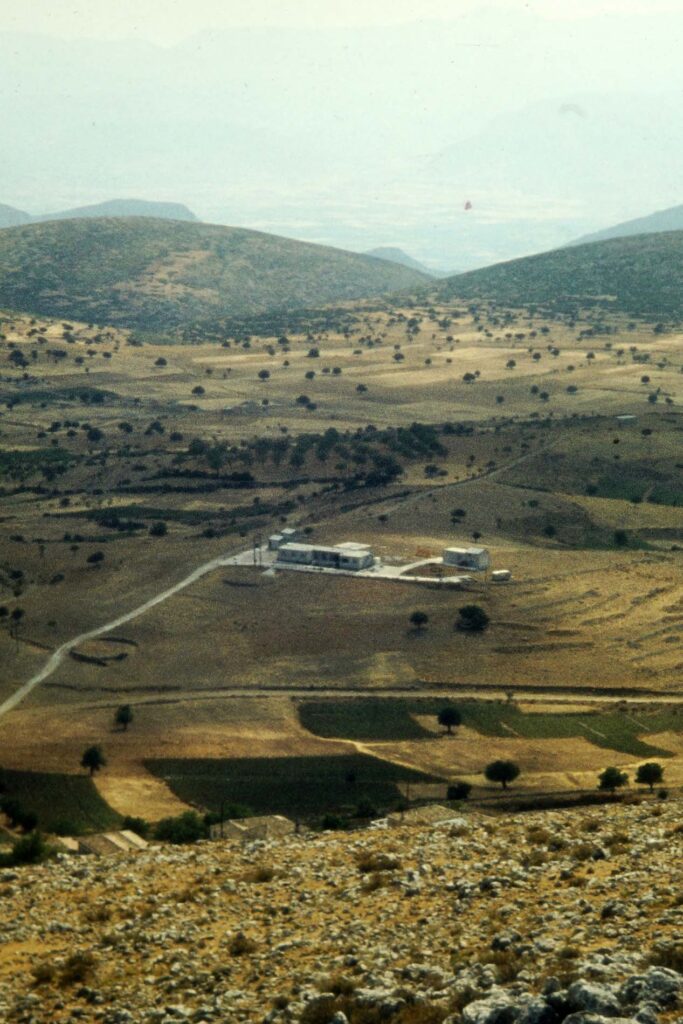
© Peter B. van der Wal, Netherlands Southern European Observing Station

Did you know?
The Watchman of Stars
The name Dragatoura derives from the medieval Greek word dragatis (δραγάτης), a watchman who guarded crops from elevated positions offering unobstructed views of the surrounding countryside.
Dragatoura, therefore, was a place of observation. Today, Stephanion Observatory stands on that same hill: where the watchman once turned his gaze towards the land, we now turn our eyes towards the sky.
ΙΣΤΟΡΙΑ
The Observatory Takes Shape
The original plan for the Observatory envisaged a single building that would house the Hamburg University telescope while also providing accommodation for the observers.
This plan changed in the spring of 1966, when approval was given for the French National Centre for Space Studies (CNES) to establish its mobile scientific satellite tracking station at Stephanion for a period of two years, bringing with it a sizeable scientific team.
Around the same time, following a visit by Adriaan Blaauw to Dragatoura Hill, the Dutch astronomers decided to establish their own observing station at the same site.
The Observatory thus developed into a small international research centre. Two buildings with roll-off roofs housed the German and Dutch telescopes, while a two-storey building, with a roll-off roof on its upper level, accommodated the French telescope and laser-ranging system. The French station’s Doppler system was installed in an open area of the Observatory grounds, while its supporting equipment was housed in prefabricated containers positioned alongside the main facilities.
A 207 m² building was constructed to provide living and working accommodation for the French team and, by agreement, also housed the German and Greek observers. The Dutch observers, most of whom were students, stayed in a large caravan brought from the Netherlands and positioned at the northern end of the Observatory grounds.
Construction of the Observatory buildings was undertaken by PROKAT, based in Moschato, while the roll-off roofs were manufactured by DEXION HELLAS, completing the facilities that would support a new era of astronomical research in Greece.
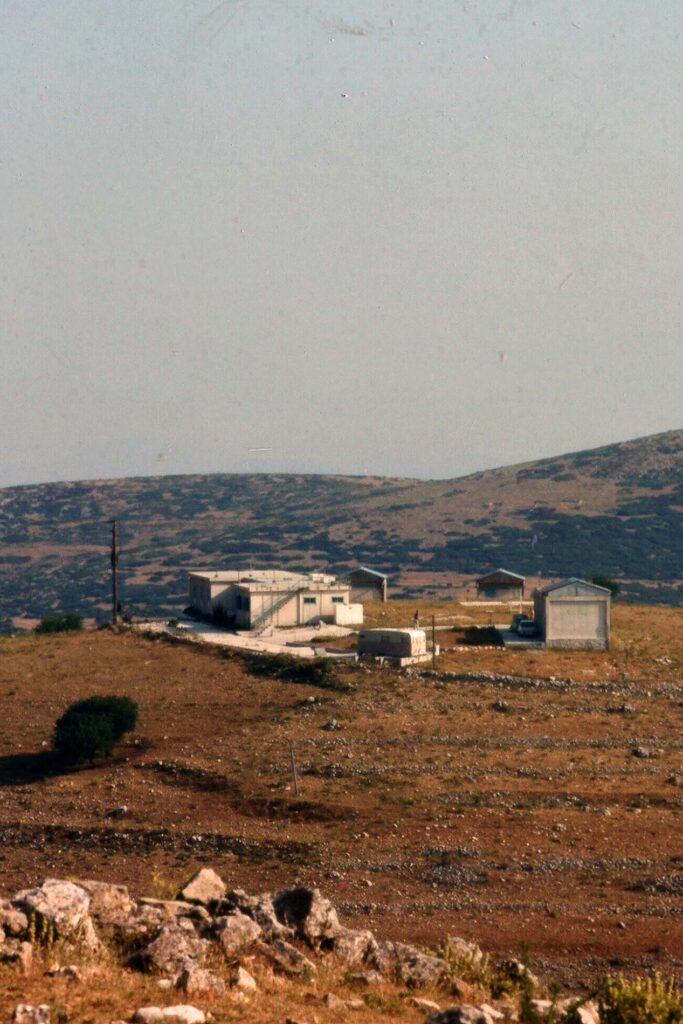
© Frank Israel, Netherlands Southern European Observing Station
The Visionaries
Behind the creation of the Stephanion Observatory stood a remarkable group of astronomers, scientists and visionaries from Greece and across Europe whose ideas, dedication and spirit of cooperation transformed a hilltop in Corinthia into a centre of astronomical research. Discover the people whose contributions shaped the Observatory and left a lasting mark on its history.
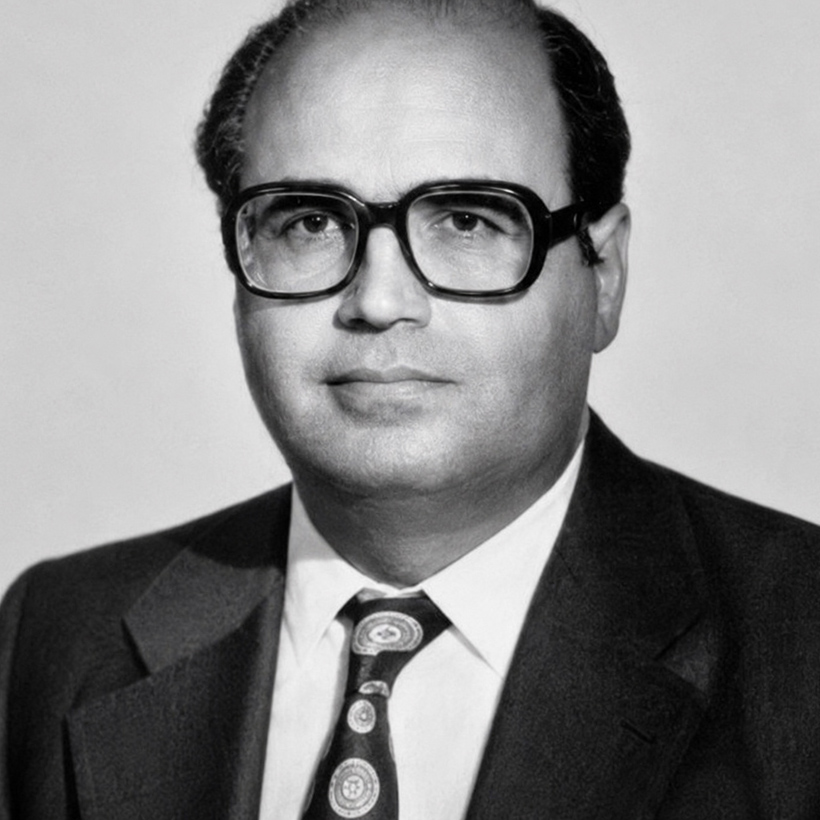
Dr. Lysimachos N. Mavridis
(1928-2011)
Laboratory of Geodetic Astronomy at the Aristotle University of Thessaloniki, Greece
Lysimachos N. Mavridis was one of Greece’s most distinguished astronomers of his time and a leading figure in the development of modern astronomical research in the country.
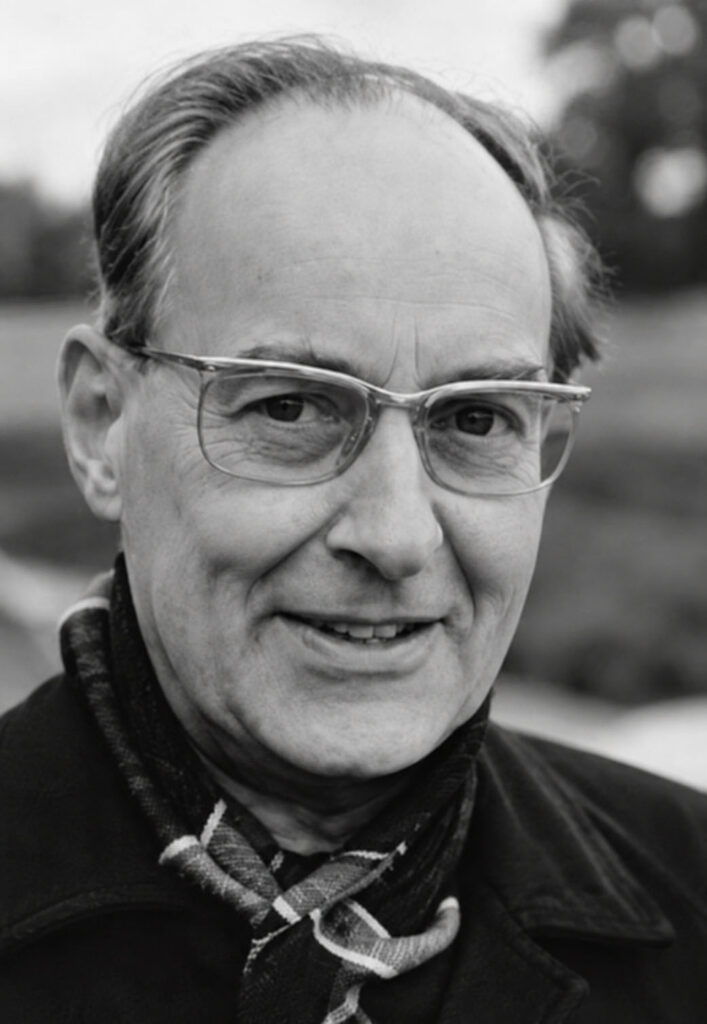
Dr. Adriaan Blaauw
(1914-2010)
Kapteyn Astronomical Laboratory at the University of Groningen,
The Netherlands
Adriaan Blaauw was one of the Netherlands’ most influential astronomers, a leading figure in twentieth-century European astronomy and a pioneer in the development of international scientific collaboration in the aftermath of the Second World War.

Dr. Heinz Neckel
(1930-Present)
Hamburg Observatory,
Germany
Heinrich “Heinz” Neckel was a German astronomer of the Hamburg Observatory and one of the key astronomers in the creation of Stephanion Observatory.