
EXPLORE THE OBSERVATORY
History
and
Scientific Legacy
From a visionary international project in the Space Age to a centre of research, education and Citizen Science, discover the remarkable story of Stephanion Observatory across six decades of exploration and discovery.
FROM THE SPACE AGE TO CITIZEN SCIENCE
Six Decades Under the Stars
The story of Stephanion Observatory began in the spring of 1964, when a team of distinguished Dutch astronomers, accompanied by Professor Lysimachos N. Mavridis of the University of Thessaloniki, visited the village of Stephani in search of an ideal location for astronomical observations. Their vision marked the beginning of an extraordinary international scientific collaboration.
By 1967, Stephanion Observatory had become a meeting place for European astronomy. Astronomers and institutions from Greece, Germany, the Netherlands and France brought together their expertise and their telescopes, transforming a small village in the Peloponnese into an important centre for astronomical research.
Among the first instruments to operate at Stephanion were a 38 cm reflector and UBV photometer from the Hamburg Observatory, a satellite-tracking station of the French National Centre for Space Studies (CNES), and the 40 cm Van Straaten Reflector of the Netherlands European Southern Observing Station (N.E.S.O.S.), which served the Dutch astronomical community between 1967 and 1973.
A new chapter began in June 1971, when the Aristotle University of Thessaloniki installed its 30-inch (76 cm) Cassegrain reflector—the first modern research telescope in Greece and, at the time, the largest telescope in both Greece and the Balkans. It would continue research at Stephanion for almost four decades, establishing the observatory as one of the world’s leading centres for the study of variable stars.
Following its transfer to the Municipality of Corinth in 2014, Stephanion Observatory entered a new chapter in its history. After undergoing extensive restoration and modernization works between 2020 and 2024, this historic center of astronomical research gained renewed momentum. Building on its remarkable scientific heritage, its mission today combines astronomical research with science education, public outreach and Citizen Science.
In collaboration with the National Observatory of Athens and the University of Patras, the observatory supports contemporary research through projects such as ExoClock in preparation for ESA’s ARIEL mission, while welcoming schools, visitors and amateur astronomers to explore the Universe through observation and discovery.
Observatory History
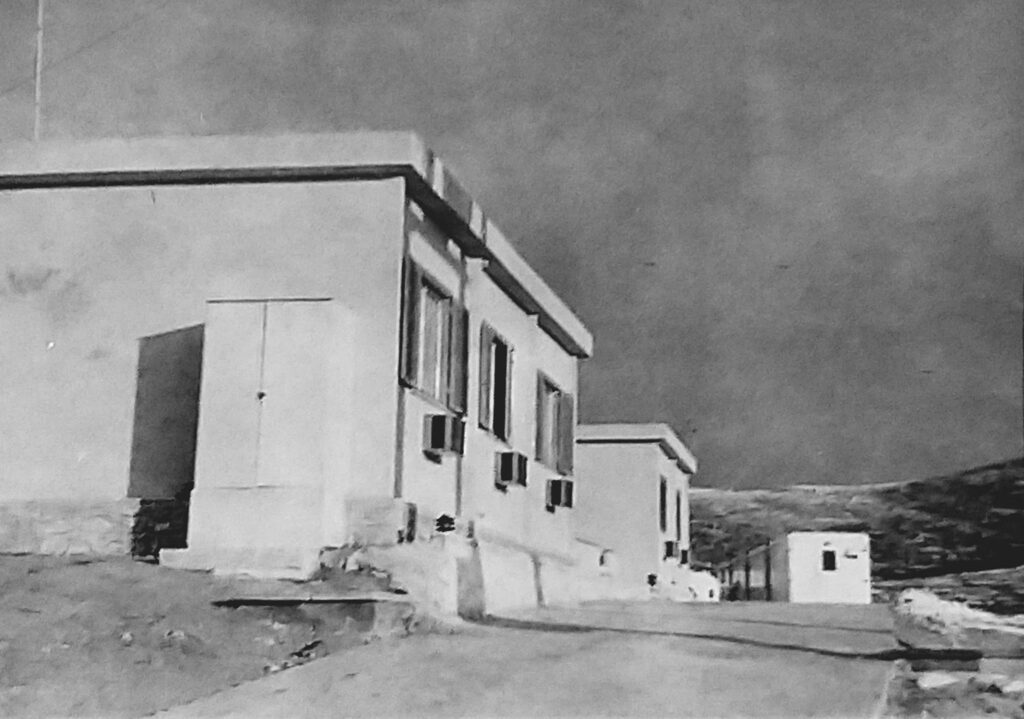
1966-1973 | The Early Years
Where European Astronomy Came Together
Discover the international story of Stephanion Observatory’s early years during the Space Age—the missions, the European collaborations and the people who laid the foundations for an extraordinary scientific legacy.
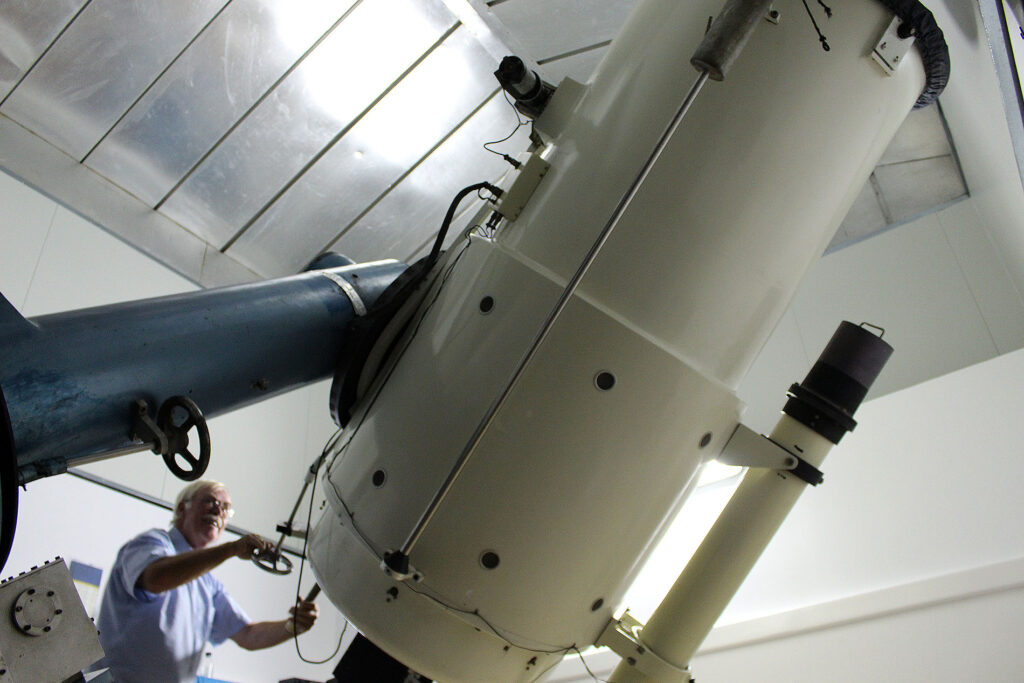
1971-2008 | The Research
Photoelectric Observations of Flare Stars
Discover how the Aristotle University of Thessaloniki’s 30-inch telescope marked the beginning of a new era for Greek astronomy and established Stephanion Observatory as an internationally recognised centre for variable star research.
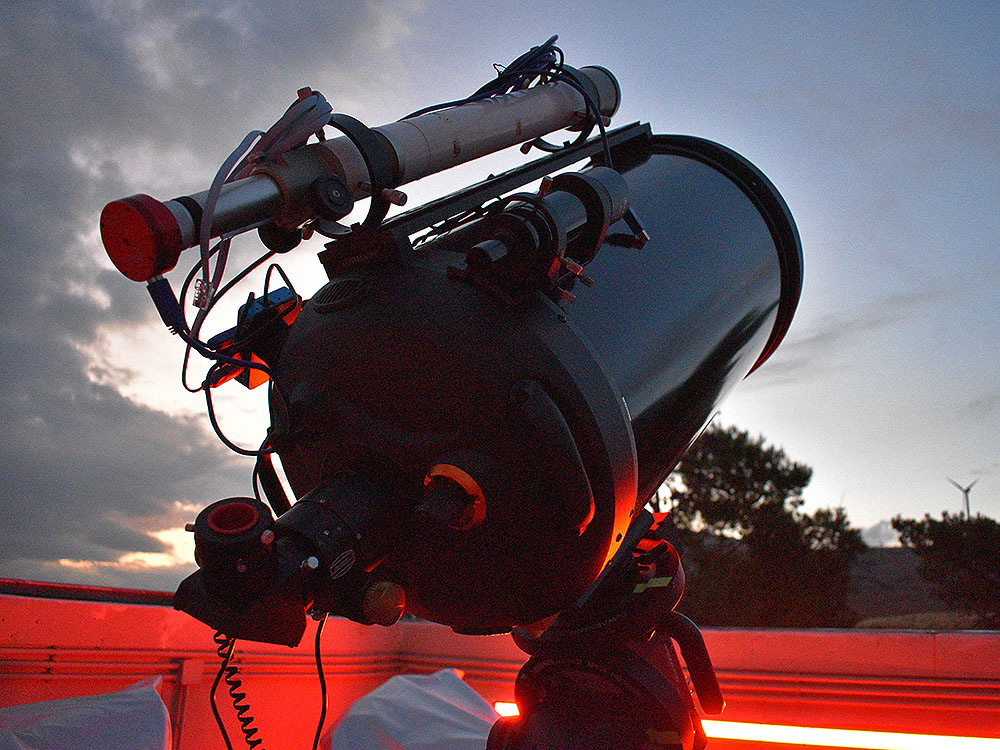
2014-Present | Citizen Science
New Horizons, Shared Vision
From its historic legacy to a new mission. Discover the vision that has transformed Stephanion Observatory into a modern centre for research, education and Citizen Science.
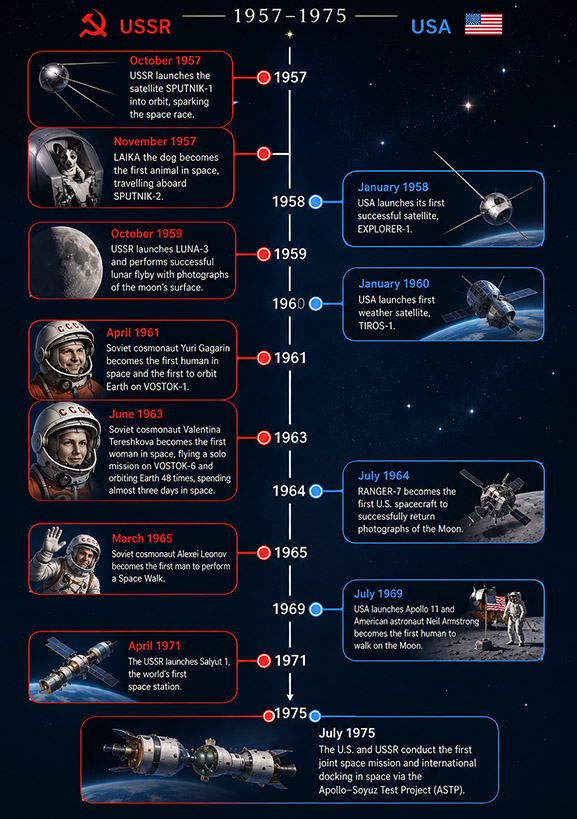
IN CONTEXT
The Era of Space Race
Following the Second World War, tensions rose between two of the victors; the Soviet Union (USSR) and the United States (US), a conflict that had its primary origins in the struggle between two political beliefs of communism (USSR) and capitalism (US) and became known as the Cold War.
Aided by German missile technology and scientists from the former German missile program, both superpowers invested heavily in rocket engineering to deliver nuclear warheads; a technology that naturally extended to space exploration. Achievements in space demonstrated technological and intellectual superiority, which was perceived as a proxy for military dominance. Thus, the Space Race became a symbolic extension of the nuclear arms race.
The competition began on 2 August 1955, when the Soviet Union responded to the US announcement of their similar intent to launch artificial satellites, and ended on July 17, 1975, with the Apollo–Soyuz docking mission, humanity’s first international space mission, when U.S. astronauts and Soviet cosmonauts linked up in Earth orbit and shook hands as a political demonstration of peace.
Although dominated by the two superpowers, the Race for Space was joined by other countries as well. The third nation and first European country to launch a satellite on its own rocket was France in 1965.
It was a remarkable time in history with many far-reaching achievements in science, space exploration and technology. The Space Race produced groundbreaking efforts to launch artificial satellites, space probes of the Moon, Venus, and Mars, and human space voyages in low Earth orbit as well as lunar missions. From beginning to end, the world’s attention was captivated by this contest for dominance.
The Space Race drove broader interest and investment in astronomy, astrophysics, and space science, which in turn supported the establishment, expansion and modernization of observatories worldwide. Many key observatories were built or significantly expanded during the Space Race era, thanks to the technological momentum, funding, and scientific interest it generated.

Did you know?
A New Era for Astronomy
The Space Race transformed more than space exploration. The technological advances, scientific ambition and increased investment of the 1960s also gave new momentum to astronomy and astrophysics.
Around the world, observatories were established, expanded and equipped with increasingly sophisticated instruments, opening new possibilities for studying the Universe from the ground.
Stephanion Observatory was founded in 1966, at the height of this remarkable era of scientific and technological discovery.
Our Story
Born in the Space Age
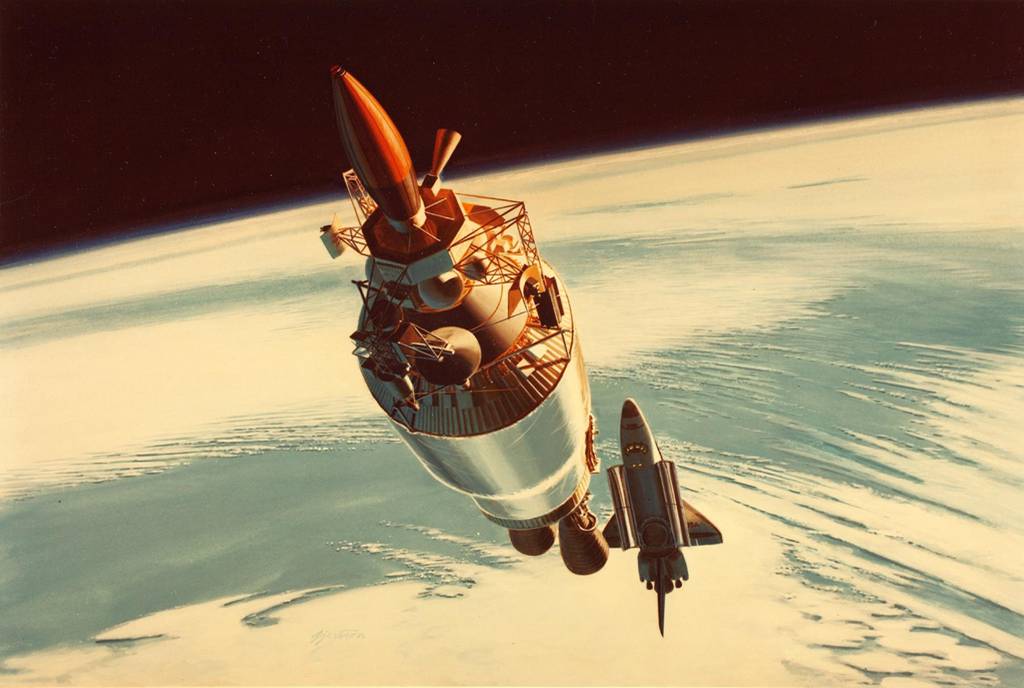
The words Space Age evoke images of rockets, Moon landings, futuristic architecture and a boundless belief in the future. It was an era when science and imagination inspired one another, and the dream of exploring space became a reality.
During the 1960s, the Space Race transformed not only technology but also culture. New discoveries influenced architecture, industrial design, fashion and art, while science fiction captured the imagination of millions through books, films and television series such as Star Trek and Lost in Space. It was an age of optimism, innovation and exploration.
Stephanion Observatory was founded in 1966, at a time when the world looked to the stars with unprecedented optimism. As satellites orbited the Earth and humanity prepared to set foot on the Moon, astronomy became a symbol of progress, discovery and international collaboration.
Nearly six decades later, that same spirit continues to inspire Stephanion Observatory. From education and citizen participation in science to modern astronomical research, the Observatory continues to encourage each new generation to look up at the sky and discover the Universe.