
EXPLORE
Stephanion Observatory Site & Facilities
GROUNDS. HORIZON. ARCHITECTURE.
Our Place among the Stars
The location of an observatory is never chosen by chance. Perched on Dragatoura Hill at an altitude of approximately 800 metres, Stephanion Observatory offered a combination of favourable climatological and atmospheric conditions, dark skies, accessibility and an open horizon — qualities that made the site well suited to systematic astronomical observation.
Established in 1966 as an international scientific facility, the Observatory was designed to accommodate researchers and instruments from the French National Centre for Space Studies (CNES), the Hamburg-Bergedorf Observatory and Utrecht Observatory. Its main building and observing facilities provided the infrastructure for both astronomical research and satellite-tracking programmes.
More than six decades later, the historic complex continues to evolve. Restored and equipped for a new era, Stephanion Observatory today brings together astronomical research, scientific heritage, citizen science, education and public outreach — preserving the legacy of its past while continuing to look towards the future.
THE OBSERVING SITE
Why Dragatoura Hill?
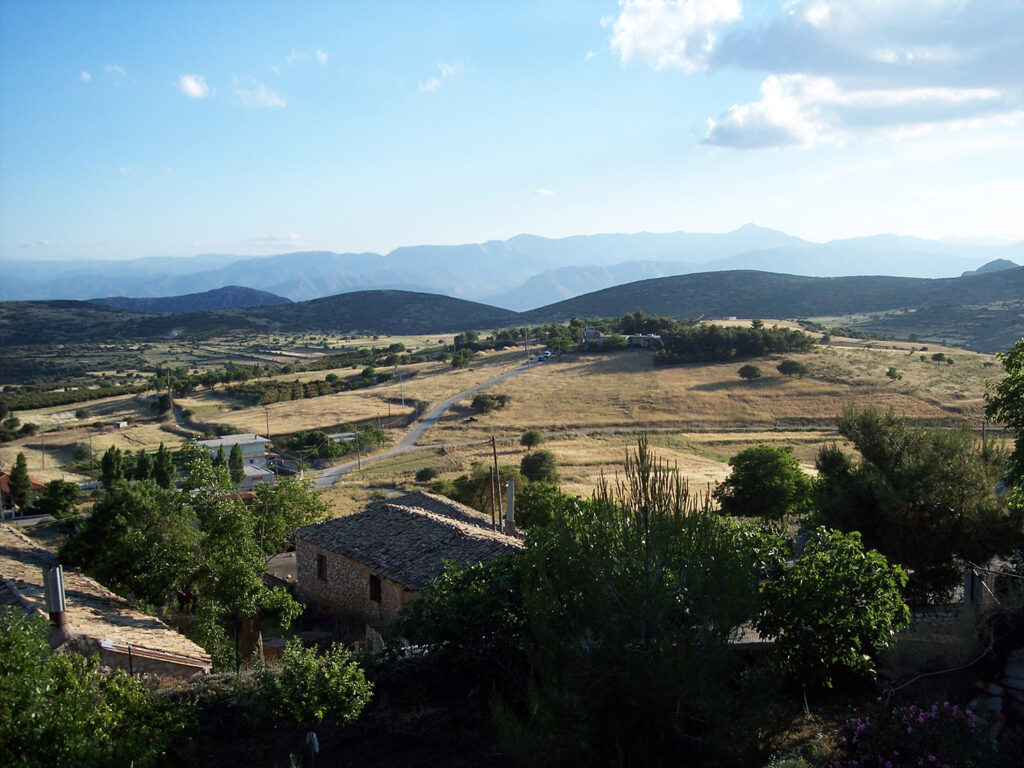
Rising to approximately 800 metres above sea level, Dragatoura Hill lies just west of the village of Stephanion, in the mountainous landscape between Corinthia and Argolis in the northeastern Peloponnese. Its elevated position provides an exceptionally broad and open horizon, one of the qualities that made the hill particularly suitable for astronomical observation.
When astronomers began surveying potential observing sites in the region in the 1960s, Dragatoura offered an important combination of favourable atmospheric and climatological conditions, dark skies, an unobstructed horizon and sufficient accessibility for the construction and operation of a permanent research station. These qualities contributed to its selection as the site of Stephanion Observatory.
The Observatory commands sweeping views across the northeastern Peloponnese and far beyond. Mount Arachnaion dominates the horizon to the east, while the wider panorama encompasses Mount Kyllini (Ziria), Artemision, Parnon and Taygetos. Towards the southeast, the landscape opens across the Argosaronic Gulf to the island of Spetses, with the open Aegean Sea stretching beyond.
More than six decades after the site was selected, Dragatoura Hill remains central to the Observatory’s identity, providing the setting for astronomical observation, public stargazing and night-sky education.
ARCHITECTURE
Built for International Research
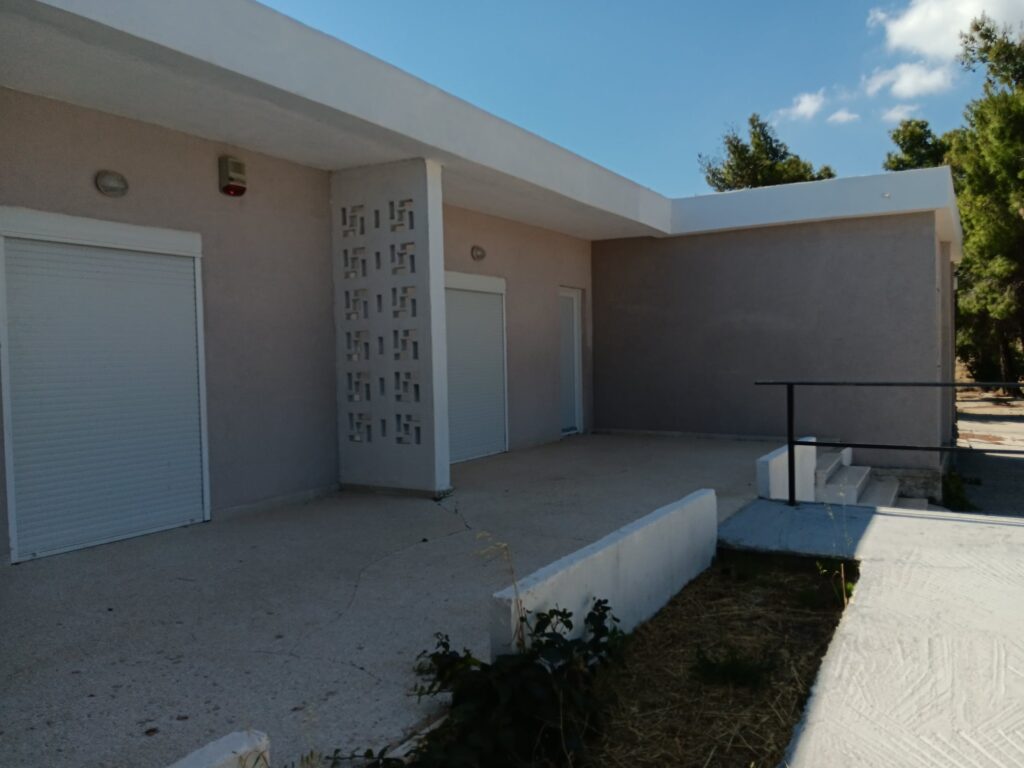
Designed in the 1960s, the Observatory complex reflects the functional scientific architecture of its era. Its prefabricated concrete construction made it possible to establish a fully operational research station in a remote mountain location within a relatively short period, while providing the laboratories, workshops, accommodation and technical infrastructure required by the international teams working at Stephanion.
Manufactured by the Greek company PROKAT HELLAS, the prefabricated components were produced in Athens, transported to Stephanion on specialised platforms and assembled on Dragatoura Hill — a remarkable logistical undertaking for its time.
The three observing buildings were equipped with distinctive roll-off roof structures, constructed by DEXION HELLAS, allowing the telescopes and tracking instruments to be exposed directly to the night sky during observations.
The complex was shaped above all by function. Its modular layout, simple geometric forms and practical design prioritised durability and efficiency, creating a purpose-built scientific environment that would support astronomical observation and international collaboration for decades.

Meaning of Dragatoura
The name Dragatoura comes from the old Greek word dragátis, meaning the watchman who kept guard over the surrounding countryside from an elevated vantage point. The hill’s name literally refers to the place where such a watchman stood.
Today, Dragatoura Hill continues this tradition of observation in a different way. Where a watchman once looked over the surounding fields and vineyards, astronomers and visitors now turn their gaze toward the stars, making the observatory a modern lookout—not over the land, but over the Universe.
RENOVATION & ADAPTIVE REUSE
Preserving the Past, Preparing for the Future
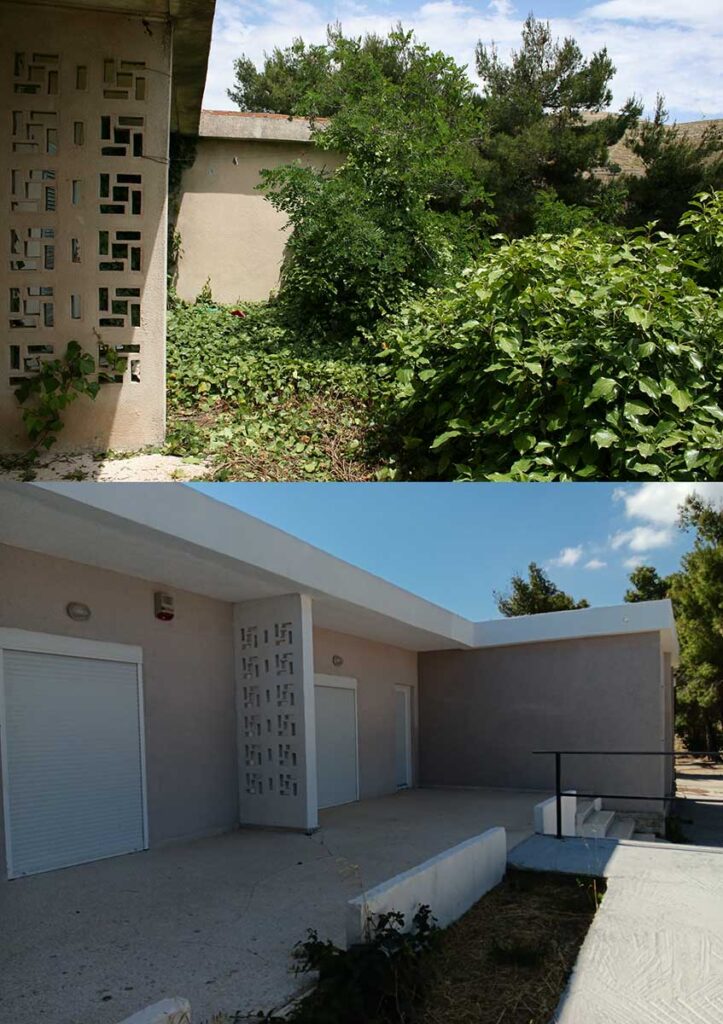
More than fifty years after its construction, the Observatory complex was in need of extensive restoration. Decades of exposure to the mountain environment had taken their toll on the buildings, roofs and infrastructure, while the surrounding grounds required substantial rehabilitation.
Between 2020 and 2024, the Municipality of Corinth carried out an extensive renovation of the Observatory, restoring the original buildings and observing facilities while adapting the site to meet contemporary needs. Essential infrastructure was renewed, the grounds were cleared and improved, and accessibility was introduced to make the Observatory more welcoming to visitors.
The renovation also created a new outdoor presentation and observing area, designed for talks, educational activities and guided tours of the night sky. During the Observatory’s public observing nights, the area becomes a shared observing space, hosting telescopes brought by amateur astronomers alongside the Observatory’s own instruments and creating a shared space where visitors, amateur astronomers and the Observatory team can explore the night sky together.
Importantly, the renovation preserved the original character and scientific identity of the complex. The historic telescope buidings continue to serve as observing spaces, now combining the Observatory’s scientific heritage with modern astronomical equipment and new uses.
Today, the restored facilities support astronomical research, citizen science, education and public outreach, giving a new purpose to a site originally created for international scientific research in the 1960s. Rather than becoming a monument to the past, Stephanion Observatory continues to evolve as a living scientific and educational facility.
Explore the Observatory
Main Building
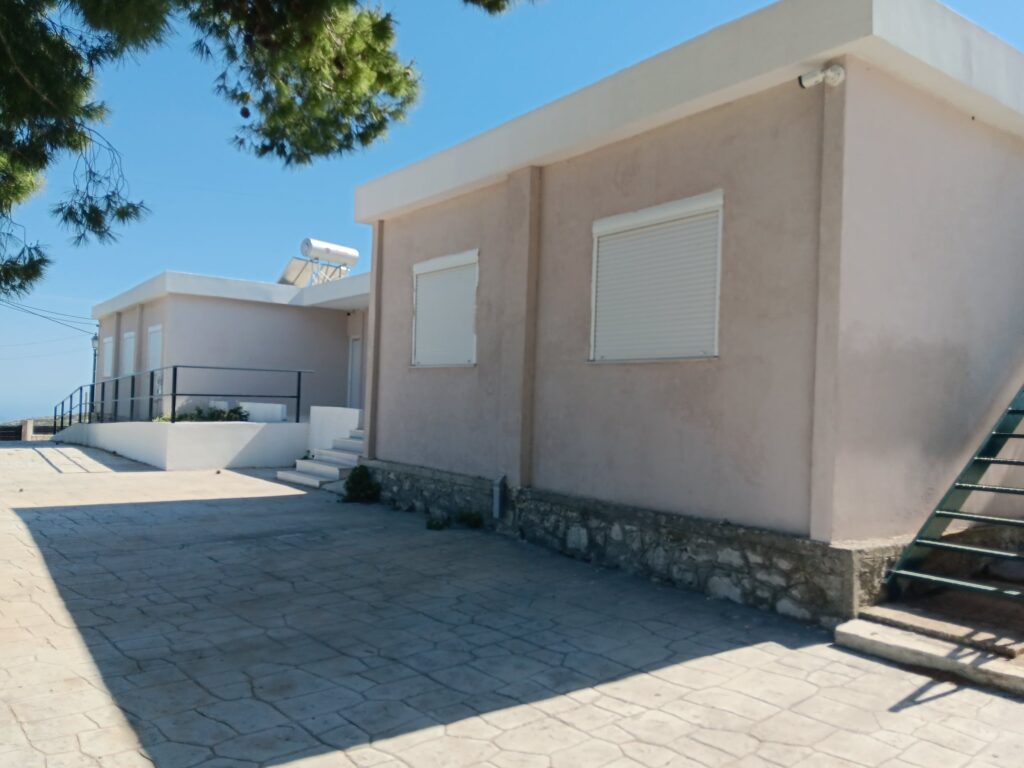
Originally the operational heart of the Observatory, providing working and support spaces for the international scientific teams, the Main Building today houses the administrative offices, exhibition area and accommodation for visiting researchers.
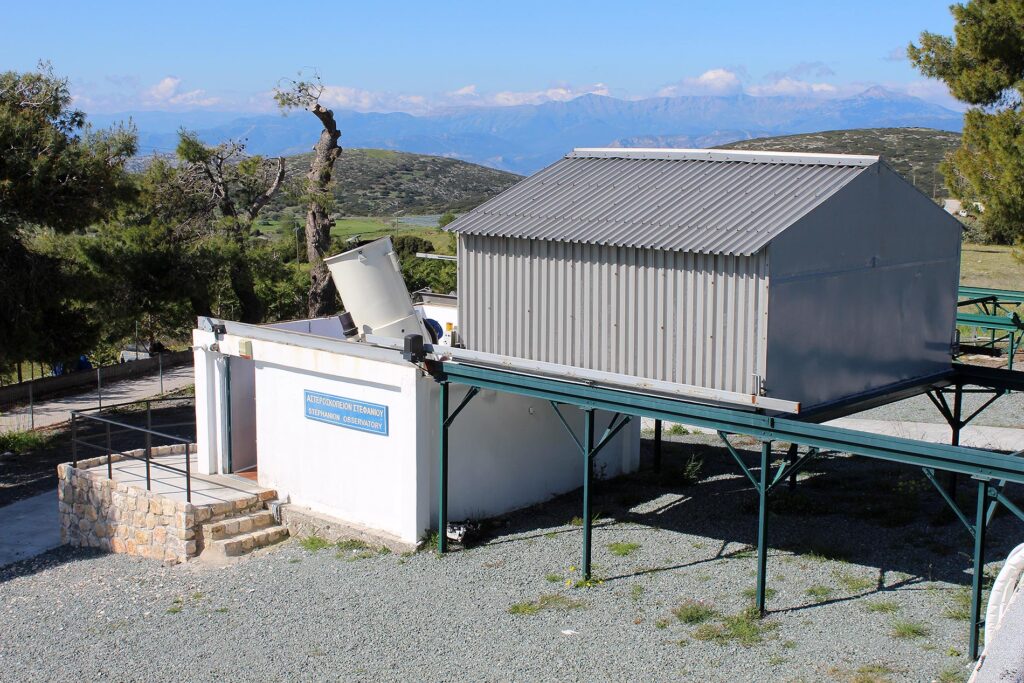
30-inch Cassegrain Building
Originally built to house the 38 cm Cassegrain reflector of the Hamburg-Bergedorf Observatory, the buidling became home to the Aristotle University of Thessaloniki’s 30-inch Cassegrain reflector in 1971. For nearly four decades, it served as the centre of much of the astronomical research carried out at Stephanion Observatory.
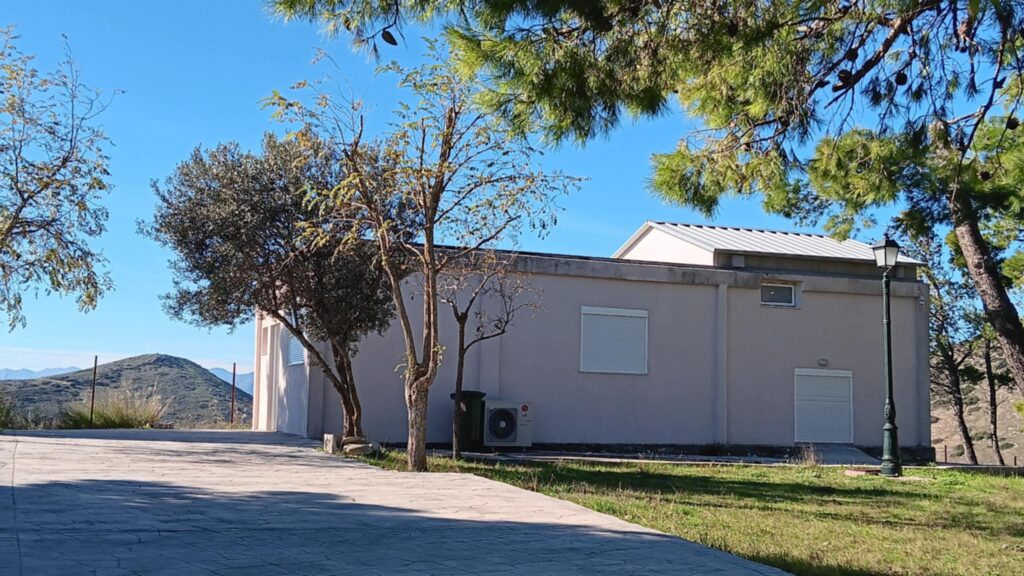
French Laser Building
Originally built as part of the French CNES satellite-tracking station and used for its laser-ranging programme, the Laser buidling today houses Stephanion Observatory’s Celestron 14-inch telescope, alongside several smaller telescopes used for observation and outreach.
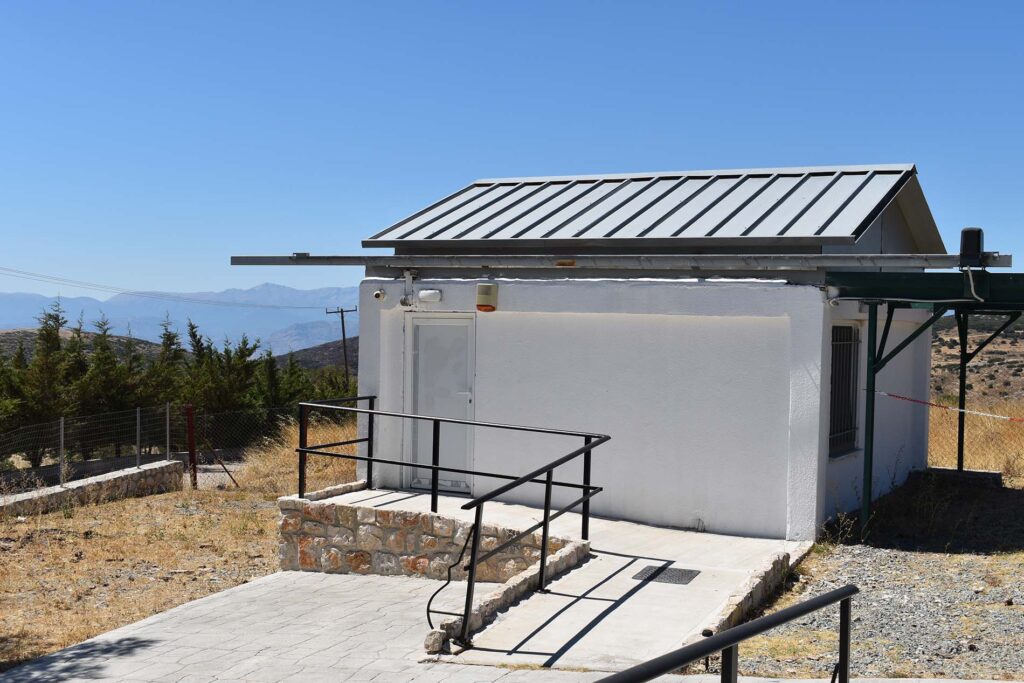
NESOS Building
Built for the Netherlands European Southern Observatory Station (NESOS), the building housed the 40 cm Van Straaten reflector of Utrecht Observatory from 1967 to 1973. Today, it houses the Observatory’s H-alpha solar telescope, along with several smaller telescopes used for observation and public outreach.