Our Mission
New Horizons, Shared Vision
OUR MISSION
A Historic Observatory. New Horizons.
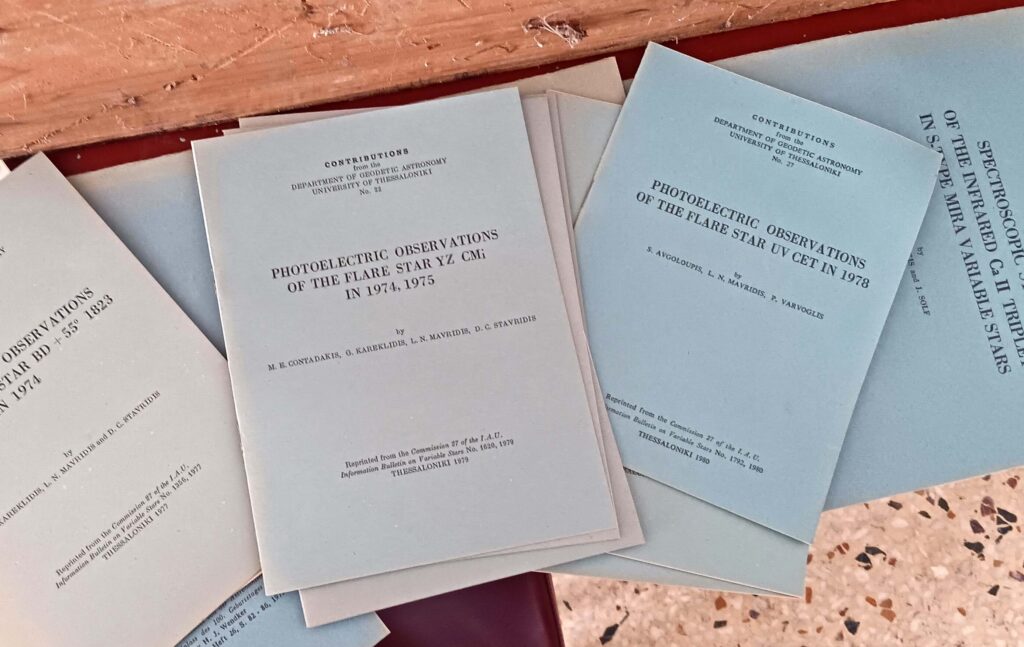
For more than half a century, the Observatory of Stephanion has been a place of observation, research and discovery. From the pioneering astronomical programmes of its early years to the decades of photoelectric photometry conducted by the Aristotle University of Thessaloniki, which contributed valuable observations of variable stars and stellar activity, and its renewed scientific activity today, the Observatory has remained dedicated to scientific inquiry and the exploration of the universe.
Today, Stephanion Observatory is entering a new chapter.
Our mission is to preserve the Observatory’s unique scientific heritage while keeping it alive — as a place where research, education, citizen science and public engagement with astronomy can meet.
Through new scientific collaborations, modern observing programmes and instruments, educational activities and opportunities for people to participate in science, we are building on the Observatory’s scientific legacy and creating the conditions for new projects, new knowledge and new generations of observers.
Our Mission
The Observatory’s mission today is built around four closely connected areas. Together, they define Stephanion Observatory as both a place of scientific heritage and an active centre for astronomy — connecting its research tradition with contemporary science, education and public participation.
Scientific Research
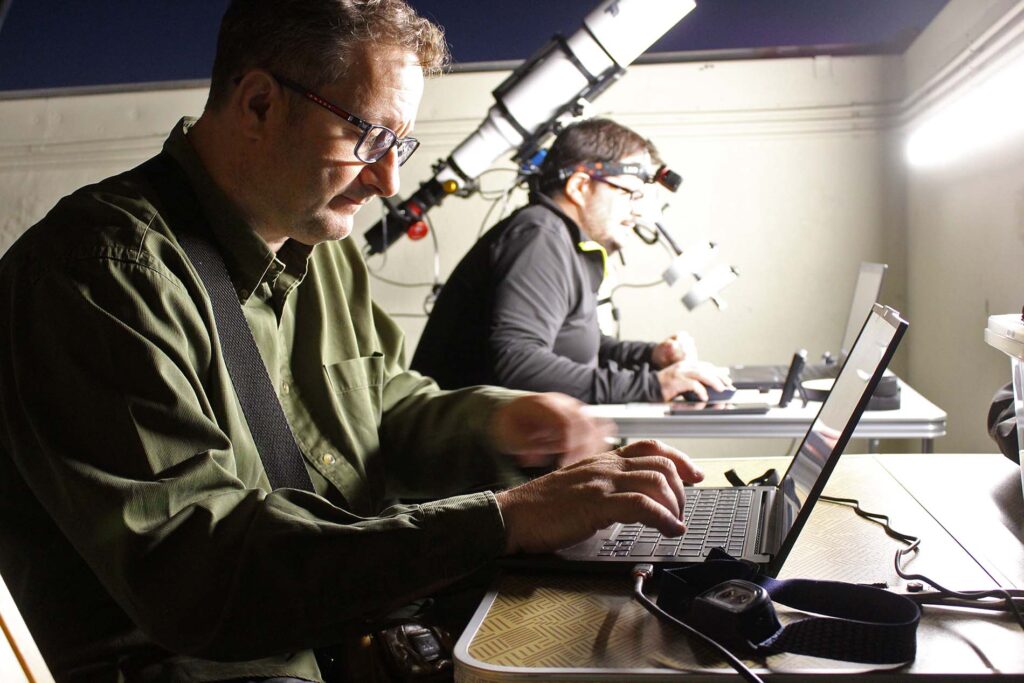
Scientific research has been at the heart of Stephanion since its foundation. Today, new collaborations, observing programmes and technologies are creating opportunities for the Observatory to contribute once again to contemporary astronomical research.
Education & Public Engagement
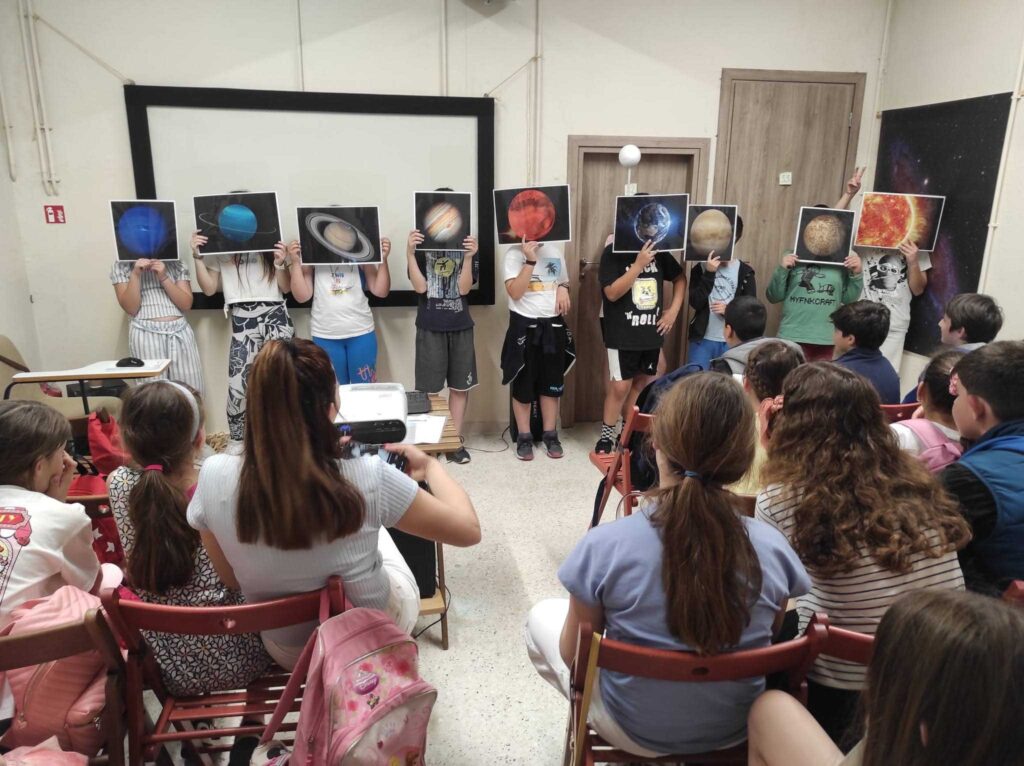
The Observatory brings astronomy closer to people through educational programmes, public observing nights, solar observation, lectures, exhibitions and activities for schools and visitors. Experiencing the sky directly remains one of the most powerful ways to inspire curiosity about science.
Citizen Science
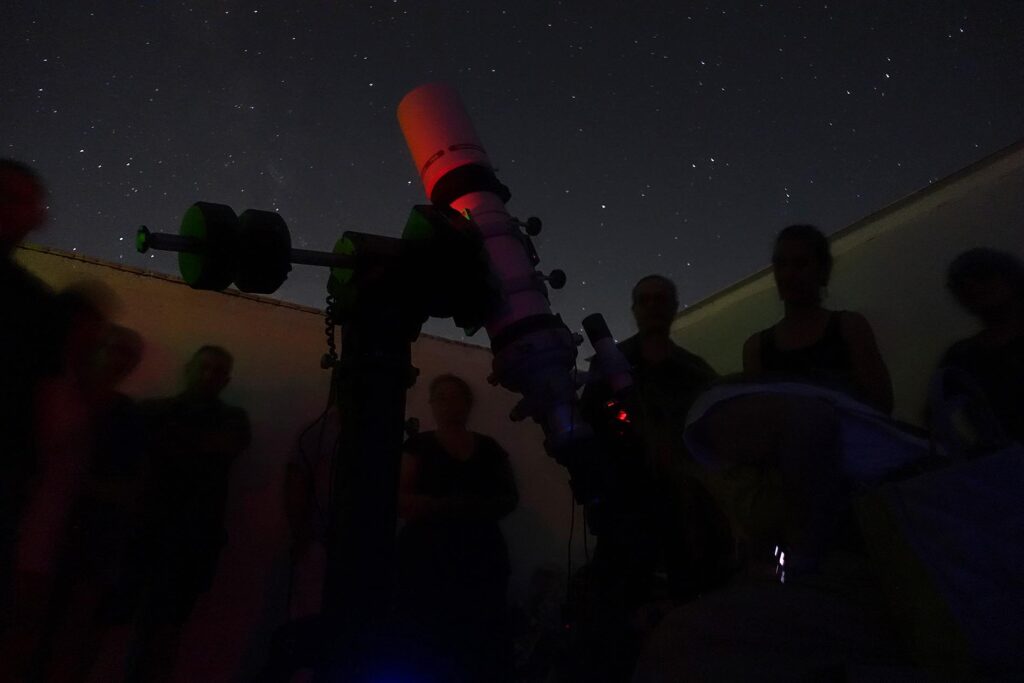
Modern astronomy offers new opportunities for people outside professional research institutions to contribute to scientific work. Stephanion aims to create a bridge between professional astronomers, students, amateur astronomers and the wider public through citizen-science programmes and observational projects.
Scientific Heritage
The buildings, instruments, archives and scientific work associated with Stephanion form an important part of Greece’s modern astronomical heritage. Preserving that heritage means more than conserving what remains: it also means documenting its history, making it accessible and connecting it with the Observatory’s continuing scientific and educational activity.
Scientific Research
Research at Stephanion Today
Scientific research has been at the heart of Stephanion Observatory since its establishment in the 1960s. For several decades, systematic observations with the 30-inch Cassegrain telescope and its photoelectric photometer produced extensive datasets on variable stars and other astronomical targets.
The scientific value of this work did not end when regular observations with the 30-inch telescope ceased. Data collected at Stephanion over many years continue to be used in astronomical studies, and publications based partly or entirely on these historical photoelectric observations continue to appear today. Long-term datasets are particularly valuable in the study of variable and active stars, where observations spanning decades can reveal changes and patterns that cannot be detected over shorter timescales.
At the same time, a new phase of scientific activity is taking shape. Cooperation with the University of Patras and the National Observatory of Athens is creating a framework for new observations, academic collaboration and the development of contemporary observing capabilities at Stephanion.
The development of robotic and remotely operated instrumentation forms part of this new direction, opening possibilities for systematic observations, student training and participation in collaborative research programmes.
In this way, research at Stephanion spans two complementary directions: preserving and making use of the scientific record accumulated over decades, while creating the conditions for new observations and new research.
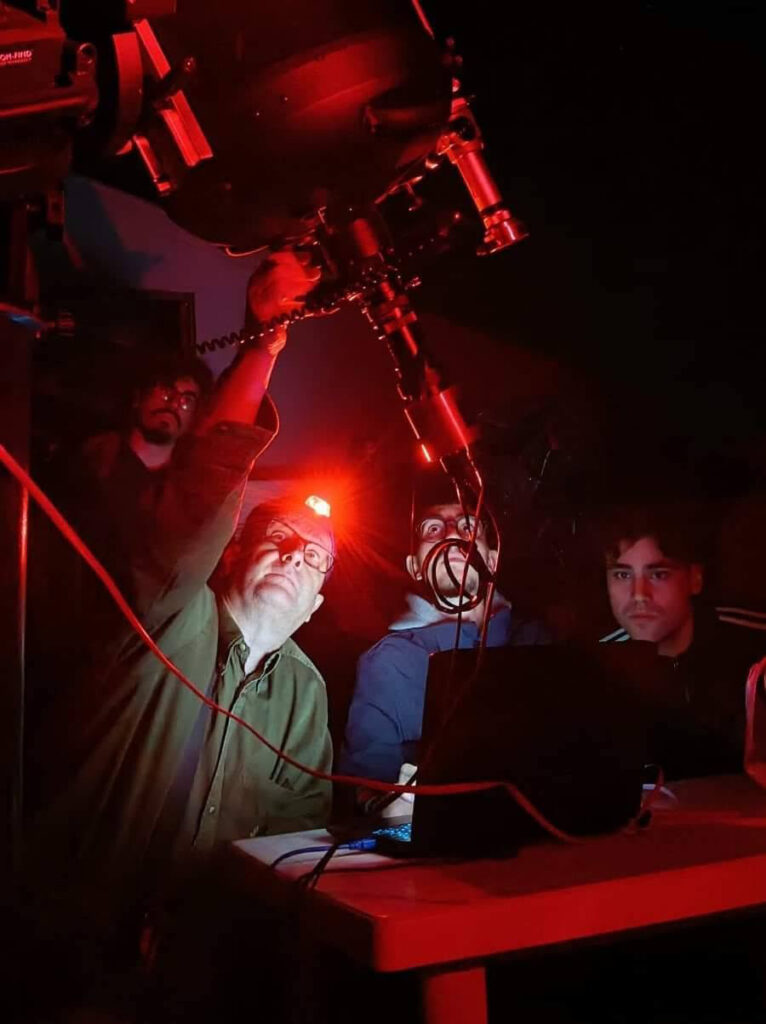
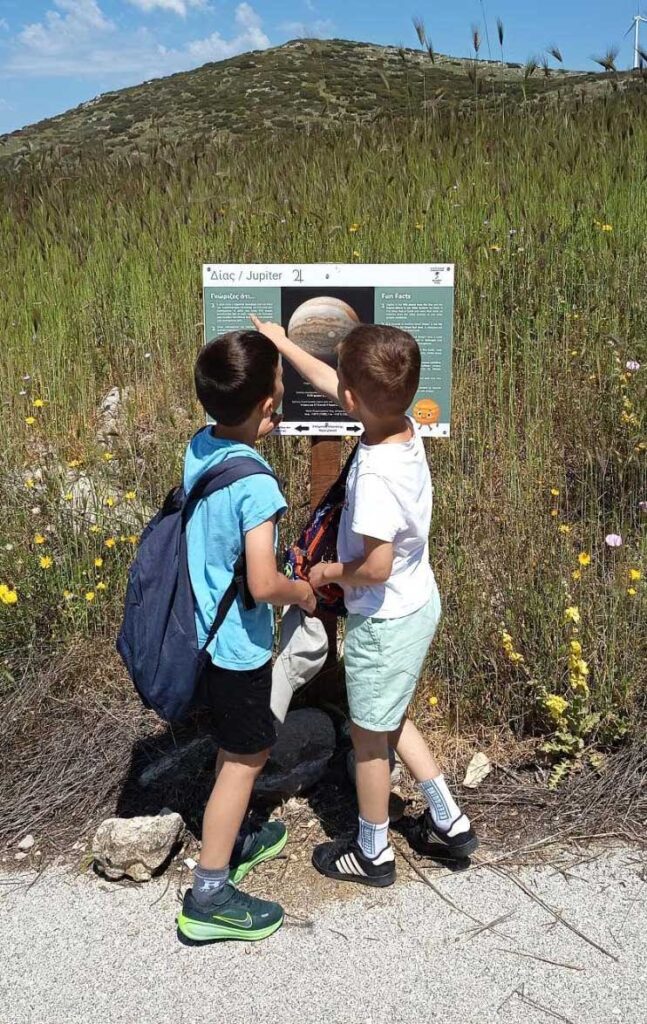
Young visitors taking part in an astronomy activity at Stephanion ObservatoryEducation & Public Engagement
Astronomy for Everyone
Astronomy begins with curiosity. You do not need to be a scientist to look through a telescope, recognise a constellation, observe the surface of the Sun or begin to understand the scale of the Solar System.
Making these experiences accessible is an essential part of the Observatory’s mission. Throughout the year, Stephanion welcomes visitors through public observing nights, solar observations, educational programmes, lectures, exhibitions and special events, offering different ways to discover astronomy and the science behind what we see in the sky.
For younger visitors and schools, activities are designed to encourage observation, questions and exploration. The Observatory itself becomes part of the learning experience: historic and modern telescopes, the night sky above Stephanion and the 590-metre Planet Trail provide opportunities to explore subjects ranging from the scale of the Solar System to the nature of stars and planets.
Public and educational activities at the Observatory are supported by the Astronomical Union of Corinth “ASTERION”, bringing together astronomers, educators, students and volunteers to share knowledge and practical observing experience with visitors.
Our aim is not simply to explain astronomy, but to provide opportunities to experience it directly — under the Sun during the day, beneath the stars at night, and through encounters with the instruments and people that make astronomical observation possible.
Citizen Science
Taking Part in Discovery
Astronomy has a long tradition of collaboration between professional and amateur observers. Today, digital detectors, automated telescopes and shared scientific databases have created new opportunities for people outside professional research institutions to contribute observations of genuine scientific value.
Citizen science at Stephanion aims to turn participation into contribution. Through carefully designed observing programmes, training and collaboration with scientific institutions, amateur astronomers, students and interested members of the public can become involved in collecting and analysing astronomical data.
One example is the observation of exoplanet transits. By precisely measuring the small decrease in a star’s brightness as a planet passes in front of it, ground-based observers can help refine the predicted timing of future transits. Stephanion participates in ExoClock, an international citizen-science project supporting ESA’s Ariel mission, which will study the atmospheres of planets beyond our Solar System.
Such programmes demonstrate an important principle behind the Observatory’s renewed role: meaningful participation in astronomy does not always require access to a major research facility. With appropriate equipment, methodology and scientific coordination, observations made from a small observatory can become part of much larger international datasets.
At Stephanion, citizen science provides a bridge between research, education and public participation — giving people the opportunity not only to observe the universe, but to contribute to the scientific effort to understand it.
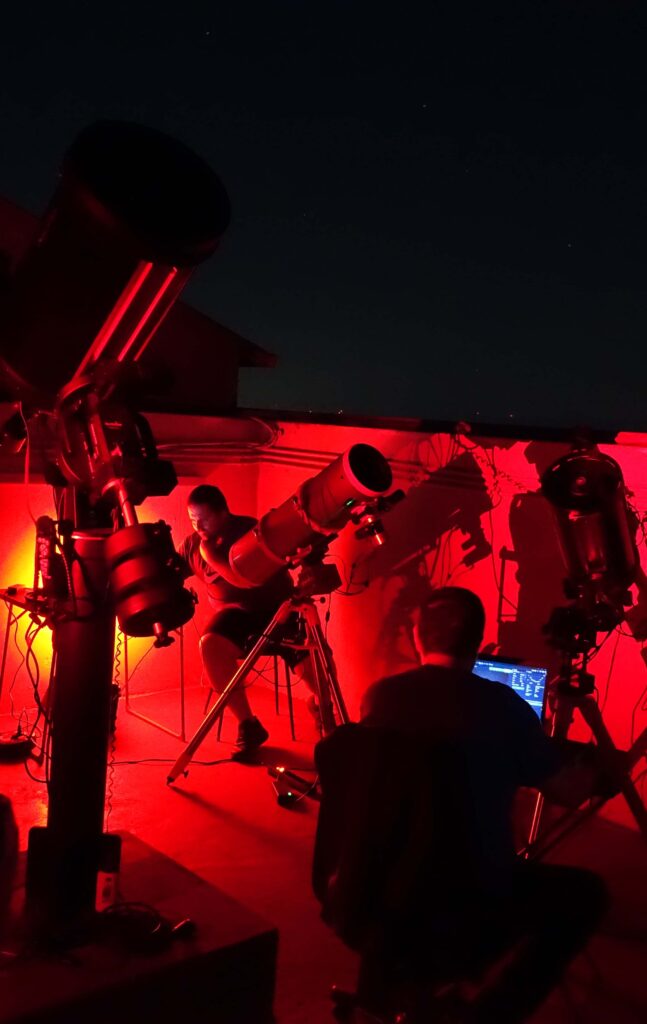
Exoplanet observations at Stephanion Observatory
Scientific Heritage
Preserving a Scientific Legacy
The scientific legacy of Stephanion Observatory extends far beyond its buildings and telescopes. It is found in the observations made here, the data collected over decades, the scientific papers they produced, the instruments and techniques used by successive generations of astronomers, and the people and institutions from Greece and abroad who contributed to its work.
Preserving this legacy begins with the Observatory itself. The restoration of its buildings and observing facilities has safeguarded an important site in the history of modern Greek astronomy, while the preservation of its historic instruments allows visitors to encounter the technologies through which astronomical research was once carried out.
But scientific heritage also exists in archives, photographs, observing records, publications, technical documents and personal accounts. Documenting and bringing together this material is an essential part of reconstructing the history of Stephanion and ensuring that it remains accessible to researchers and future generations.
This work also reaches beyond Stephanion. From its earliest years, the Observatory developed through collaborations with universities and scientific institutions in Greece and across Europe. Recovering this history means tracing those connections and locating material that today survives in archives and observatories in several countries.
Our aim is not simply to preserve the Observatory as it once was, but to ensure that its scientific legacy remains documented, accessible and connected to the work taking place here today.