Stephanion Observatory | Scientific Legacy
Publications
THE RESEARCH
A Legacy Written in Starlight
For nearly six decades, the telescopes of Stephanion Observatory have contributed to astronomical research through long-term observational programmes and international collaborations. Between 1967 and the present day, observations carried out at the observatory have resulted in over 170 peer-reviewed scientific publications, forming a remarkable scientific legacy.
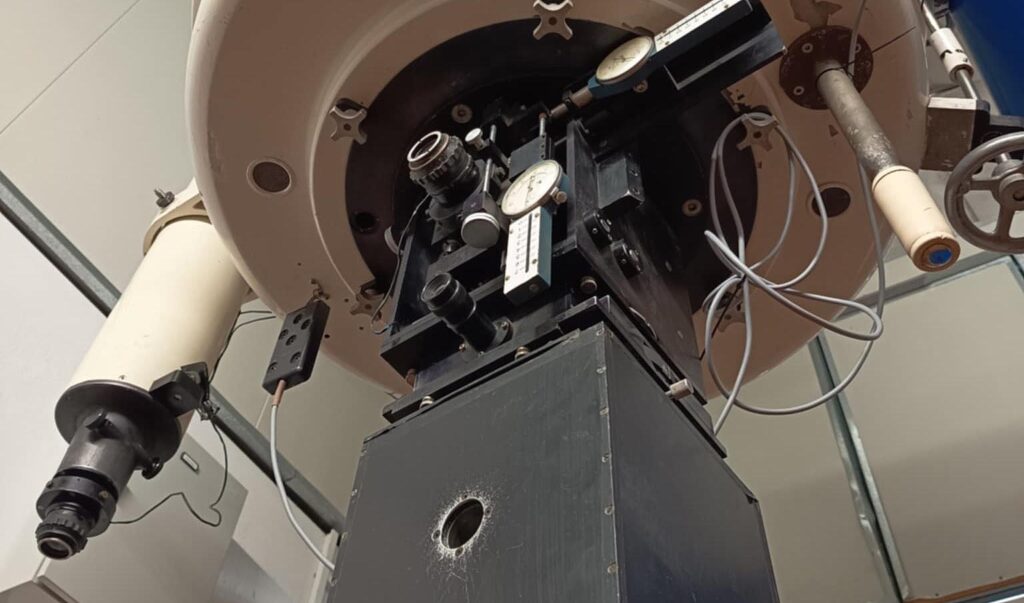
The majority of these papers were based on observations obtained with the 30-inch (76 cm) Cassegrain reflector of the Aristotle University of Thessaloniki, which was installed at Stephanion Observatory in 1971 and served as its principal research instrument for almost four decades. The telescope was equipped with a Johnson dual-channel photoelectric photometer and an offset guider unit, manufactured by Astro Mechanics Inc. The instrument incorporated an RCA 1P21 and a refrigerated RCA 7102 photomultiplier, cooled with dry ice to minimize electronic noise and maximize sensitivity. This sophisticated system enabled highly precise photoelectric measurements in the U, B, V, R and I bands of the international Johnson UBV photometric system, providing homogeneous observations of exceptional quality over many years.
Using this instrumentation, astronomers at Stephanion carried out systematic long-term monitoring of three principal categories of variable stars:
Flare stars in the solar neighbourhood, including EV Lacertae, AD Leonis and BY Draconis;
RS Canum Venaticorum (RS CVn) binary systems, such as II Pegasi, among the most magnetically active stars known;
Galactic Cepheid variables, whose pulsations play a fundamental role in our understanding of stellar evolution and the calibration of the cosmic distance scale.
The continuity of these observing programmes, spanning decades, produced unique photometric datasets that formed the basis of more than 170 original scientific papers. This exceptional body of work established Stephanion Observatory as one of the world’s leading astrophysical centres for the study of stellar activity and photometric variability during the era of photoelectric astronomy.
The publications presented here have been organised by decade, allowing visitors to explore the evolution of the observatory’s scientific output, its international collaborations, and the development of observational astrophysics from the late 1960s to the present day.
Scientific Publications
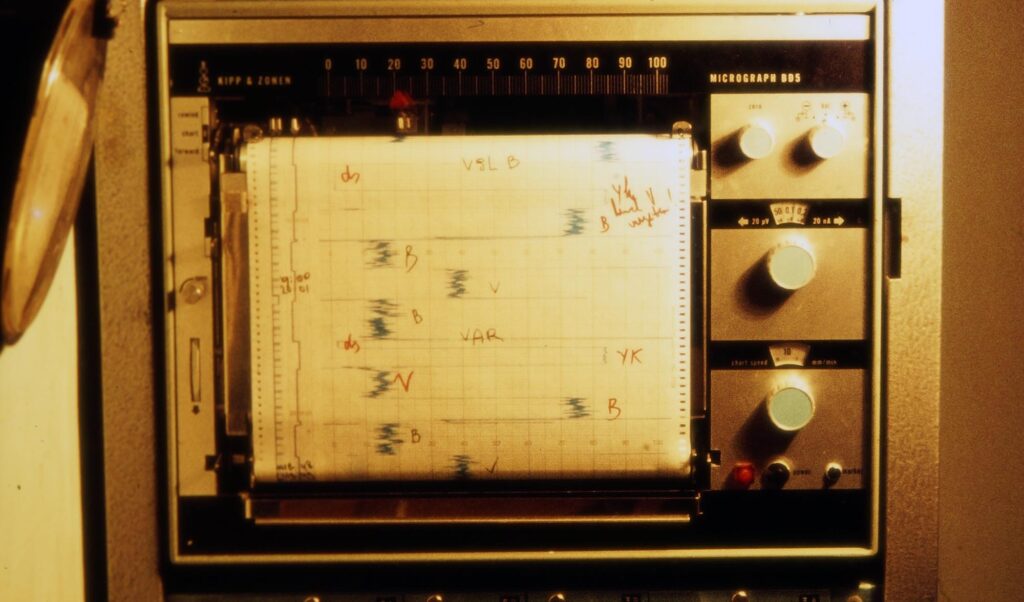
Late 1960s–1970s
Laying the Foundations
The establishment of long-term observing programmes and the first scientific publications produced with the 30-inch Cassegrain reflector.
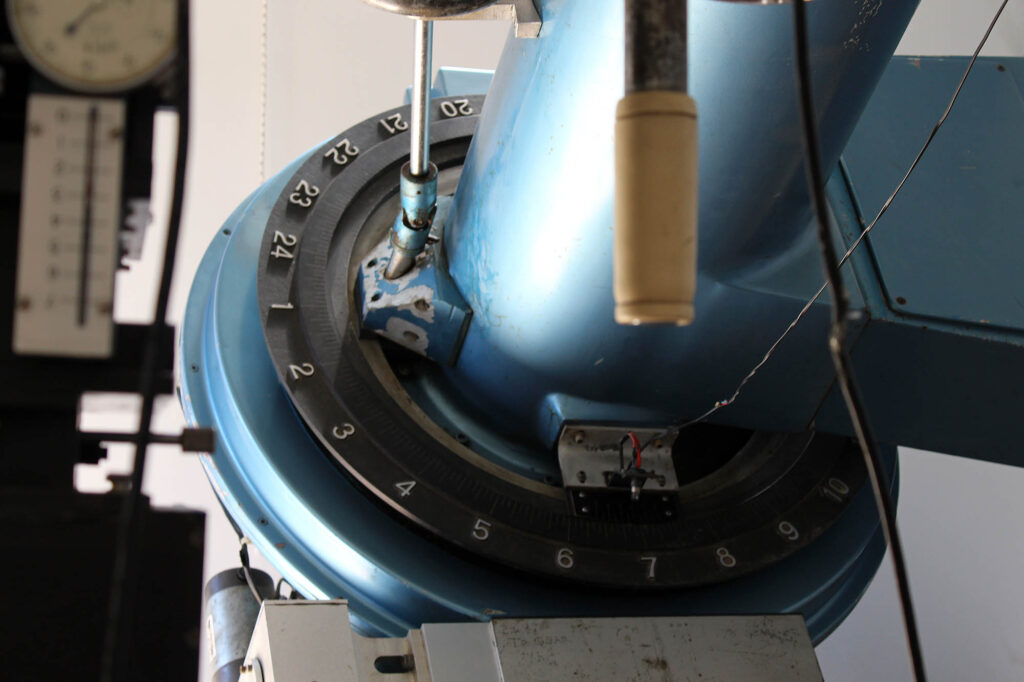
1980s
Expanding Scientific Horizons
A decade of intensive photoelectric observations and growing international recognition in the study of stellar activity and variable stars.
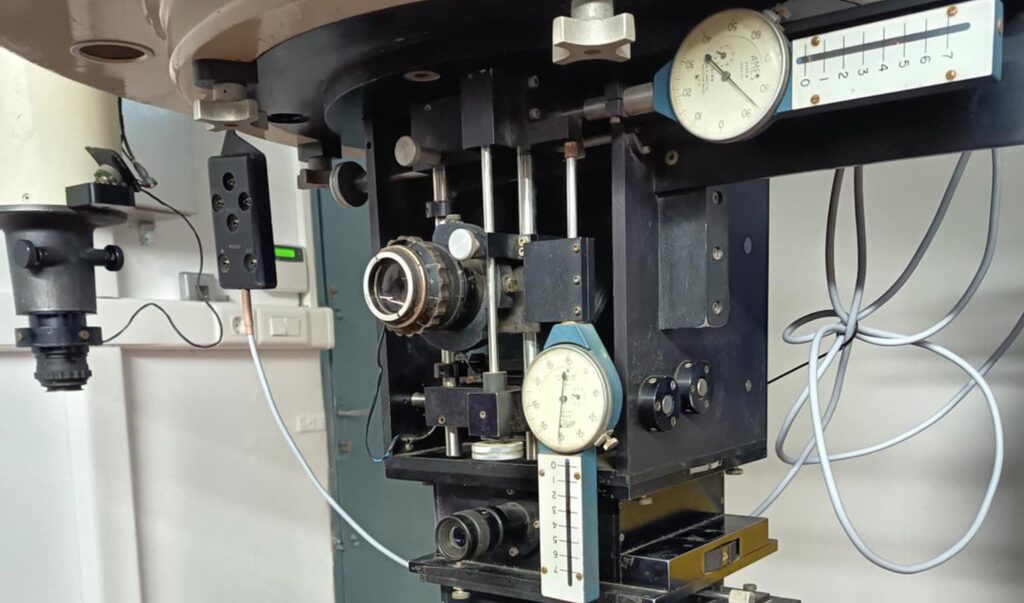
1990s
A Mature Research Programme
Expansion of long-term monitoring programmes and international collaborations, further strengthening Stephanion’s scientific reputation.
2000s–Present
An Enduring Legacy
The final years of the historic observing programmes and the continuation of Stephanion’s scientific legacy through published research.
© NASA’s Goddard Space Flight Center
RESEARCH ACTIVITIES
A Breakthrough Observation
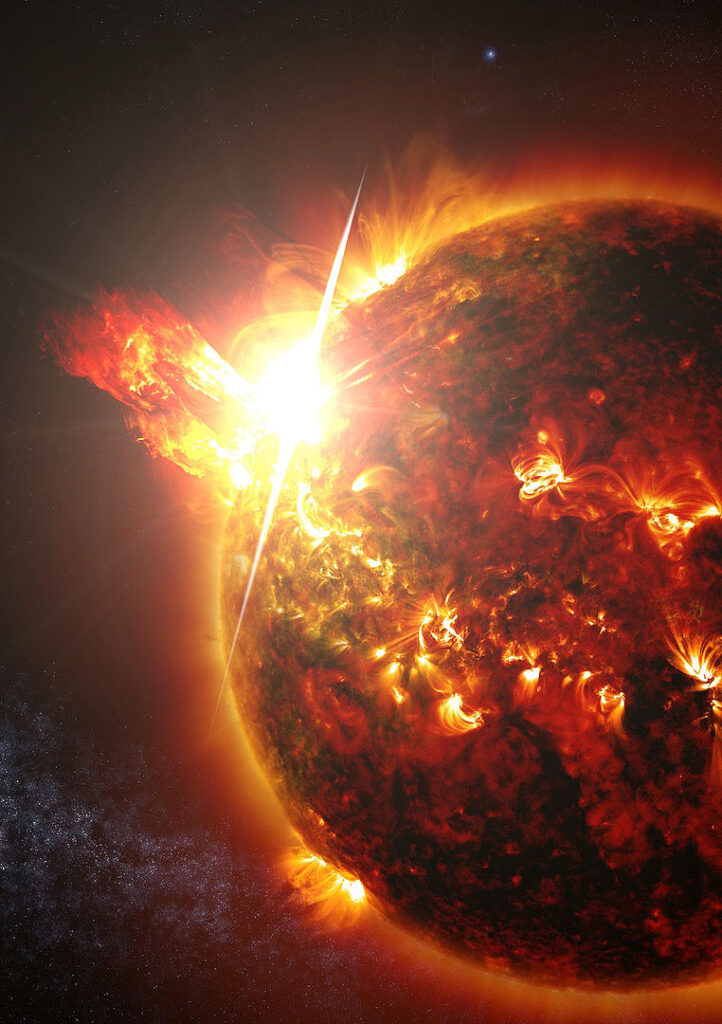
In 1989, Stavros Avgoloupis and Ioannis Seiradakis of the Aristotle University of Thessaloniki achieved a milestone in stellar activity research with the first simultaneous detection of a large flare in both X-ray and optical wavelengths on the RS CVn-type star II Pegasi (II Peg).
The flare was recorded at the same time by the Japanese X-ray satellite GINGA, capturing high-energy emission from the star’s superheated corona, and the 30-inch Cassegrain reflector of the Stephanion Observatory, which detected a pronounced increase in brightness in the U-band (ultraviolet–blue optical light).
This was a surprising discovery. Until then, astronomers believed that RS CVn stars—known for intense magnetic activity—rarely produced broadband optical flares. The II Peg flare demonstrated that extremely energetic events on these stars can in fact generate detectable “white-light” optical emission, similar to the most powerful solar flares.
The 1989 detection was important for several reasons: The flare showed that magnetic eruptions on RS CVn stars affect multiple layers of the star’s atmosphere—from the deep photosphere (optical) to the hot corona (X-ray). Using both datasets, researchers estimated the flare’s total energy output, revealing an enormously powerful event comparable to (or exceeding) some of the most energetic stellar flares known at the time. The event reshaped the understanding of RS CVn star systems in that they are not merely X-ray bright but can produce rare but significant optical continuum flares, which are structurally similar to large solar flares, but scaled up by many orders of magnitude.
The discovery encouraged a new generation of multiwavelength monitoring campaigns for active stars. Today, II Peg is recognized as one of the most active RS CVn systems, and the 1989 flare remains a cornerstone event in the study of stellar magnetic activity.

What is Photoelectric Photometry?
Photoelectric photometry precisely measures a star’s brightness and color. Before the advent of digital CCD cameras, telescopes focused starlight through filters—such as U, B, and V in the Johnson system—onto a highly sensitive detector called a photomultiplier tube. Through the photoelectric effect, incoming photons were converted into an electrical signal directly proportional to the star’s brightness. This technique enabled astronomers to detect subtle variations, determine stellar temperatures, and study variable stars with exceptional accuracy, making it the gold standard of stellar photometry for many decades.