Stephanion Observatory
Research &
Scientific Legacy
ΜΙΑ ΝΕΑ ΕΠΟΧΗ
Scientific Research at Stephanion
The first series of photoelectric observations, carried out at Stephanion between 1967 and 1970 with the Hamburg and Utrecht telescopes, confirmed the quality of the observing site and laid the foundations for systematic research at Stephanion Observatory.
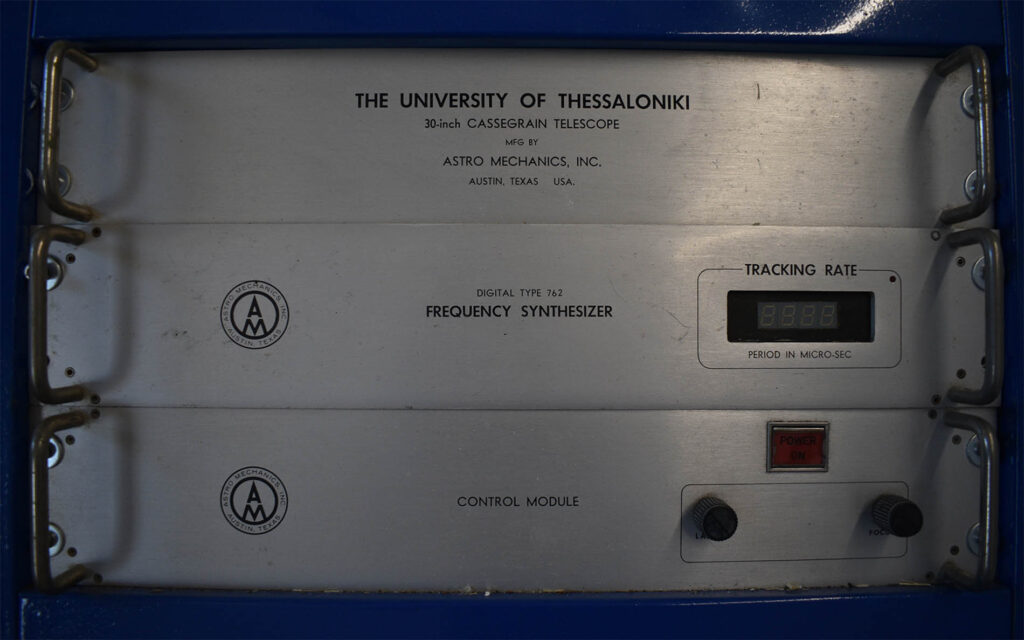
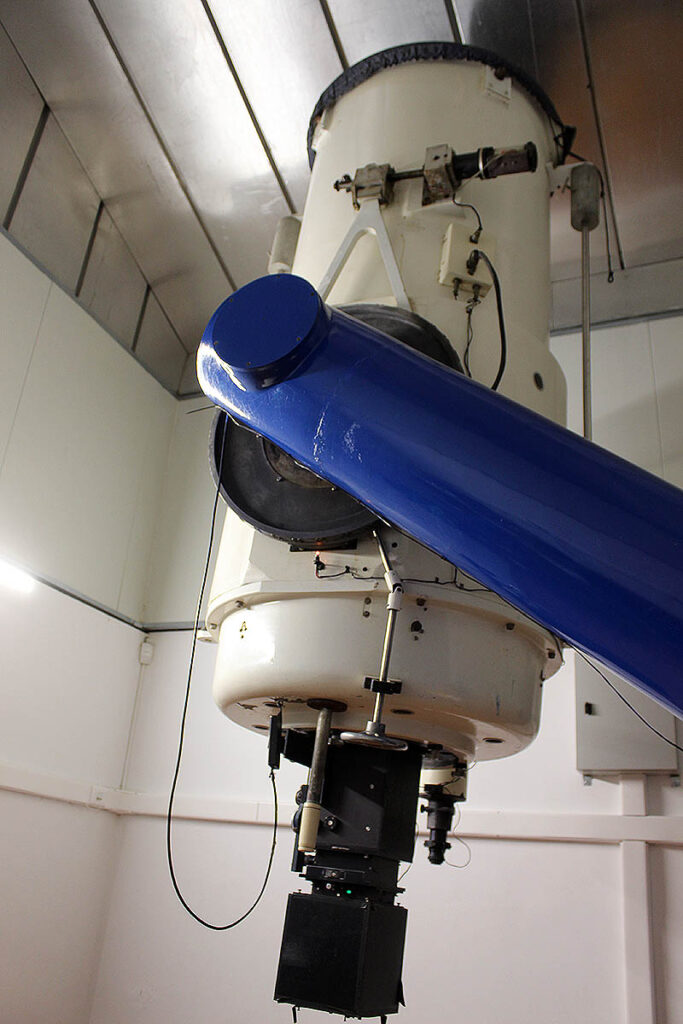
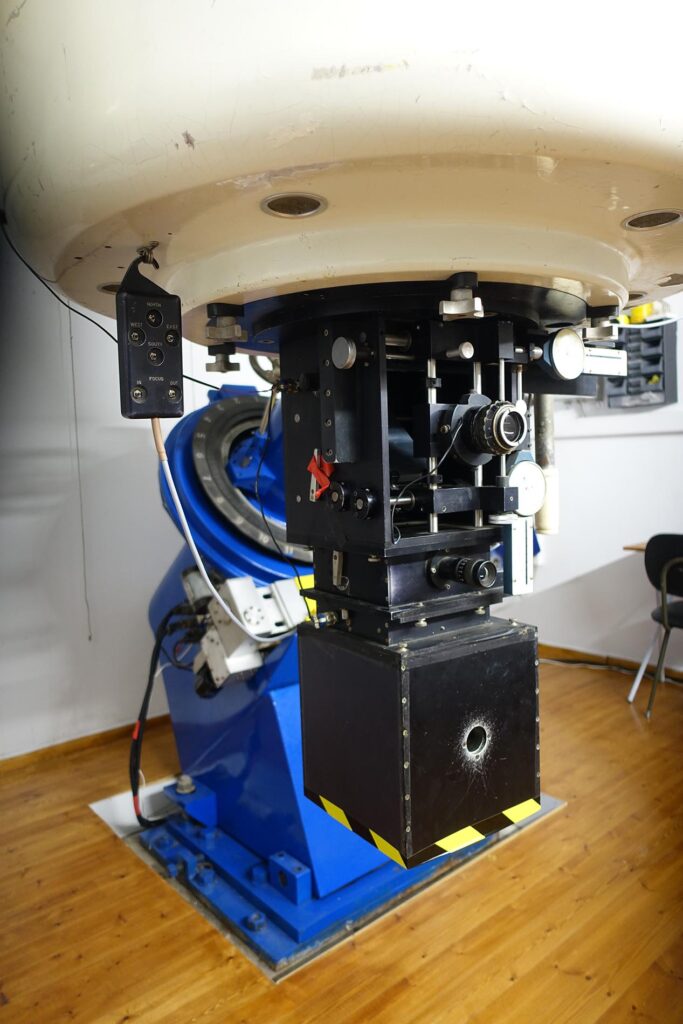
The installation of the 30-inch Cassegrain reflector of the Aristotle University of Thessaloniki in June 1971 opened a new chapter in the Observatory’s research activity. At the same time, the Dutch 40 cm Van Straaten telescope, operating as part of the Netherlands European Southern Observatory Station (NESOS), continued to be used at Stephanion until 1973.
For a time, therefore, the Observatory hosted two active research telescopes — one Greek and one Dutch — carrying out different but complementary observing programmes. This period marked the transition from the first international research missions at Stephanion to the long-term programme of systematic astronomical observations that developed around the new 30-inch telescope.
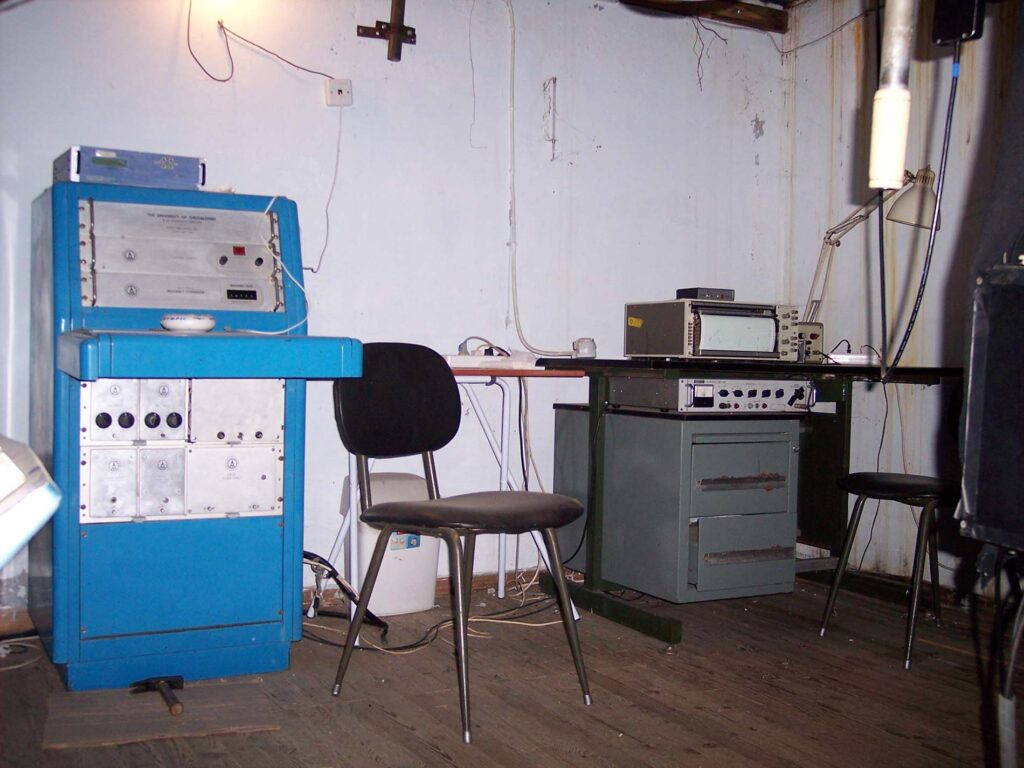
Over the following decades, much of the scientific activity focused on the photoelectric photometry of variable stars, particularly the study of flare stars. Year after year, researchers at Stephanion accumulated long and homogeneous series of observations, creating a valuable scientific archive. This research resulted in more than 170 scientific publications and remains a central part of the Observatory’s scientific legacy.
INTERNATIONAL COLLABORATION
Stephanion in International Observing Networks
From the mid-1980s onwards, research at the Observatory became increasingly connected with international collaborations.
Stephanion participated in coordinated observing campaigns in which the same active stars were monitored simultaneously from different observatories and at different wavelengths.
These collaborations combined data from optical telescopes, radio telescopes and astronomical satellites observing in the ultraviolet and X-ray regions of the electromagnetic spectrum.
In this way, photoelectric measurements made from Dragatoura Hill became part of much wider international programmes aimed at understanding the physics of active stars.
STELLAR PHOTOMETRY
Studying Brightness Variations in Variable Stars
Long-term photoelectric observations of RS Canum Venaticorum (RS CVn) variable stars and dMe flare stars at Stephanion Observatory produced detailed light curves, allowing researchers to study their surfaces indirectly.
Variations in brightness could be used to investigate the presence and distribution of starspots, their lifetimes and, more generally, the activity occurring on the surfaces of these stars.
At the same time, photoelectric observations of classical Cepheids provided valuable data for studying the properties and evolutionary development of this important class of variable stars.
STELLAR ACTIVITY
The Study of Stellar Flares
The observation of stellar flares became a particularly important area of research at Stephanion Observatory.
dMe stars and active RS CVn systems exhibit intense magnetic activity and can undergo sudden increases in brightness, similar to — although often considerably more powerful than — the flares observed on the Sun.
The long-term observations carried out at Stephanion made it possible to study the characteristics and frequency of these flares, as well as the distribution of the energy they released.
Among the stars systematically monitored were EV Lac, BY Dra and II Peg, which became the subjects of a series of scientific publications.
A LANDMARK OBSERVATION
The II Peg Flare
One of the most significant moments in the research history of Stephanion Observatory was associated with the active star II Pegasi.
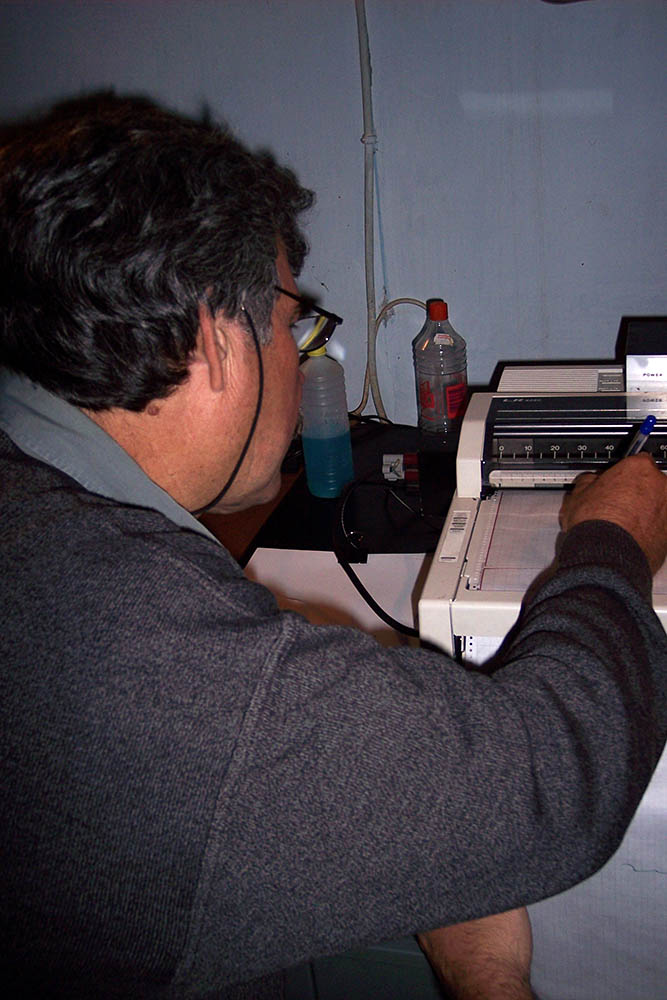
At Stephanion, the first optical flare ever detected on an RS CVn-type star was recorded. The observation was made under particularly difficult photometric conditions, during a total lunar eclipse and after the scheduled international observing campaign had already ended.
The decision to continue observing II Peg from Stephanion proved crucial. At the same time, the star was still being monitored in X-rays by the Japanese GINGA satellite, making it possible to study the same event simultaneously in different regions of the electromagnetic spectrum.
This observation became one of the most notable scientific results associated with Stephanion Observatory.
© P. van der Wal
LONG-TERM OBSERVATIONS
Searching for Stellar Activity Cycles
The long duration of the observing programmes at Stephanion allowed researchers to investigate not only phenomena lasting a few minutes or hours, but also variations developing over many years.
Of particular interest was the search for stellar activity cycles, comparable to the Sun’s well-known cycle of approximately eleven years.
A cycle of approximately five years was identified in EV Lac, while a cycle of nearly ten years was found in BY Dra. Researchers also studied the relationship between these cycles and long-term variations in the brightness of the two stars.
At the same time, the distribution of flares in relation to the rotational phase of stars such as BY Dra and II Peg was studied in order to investigate the presence of active regions on their surfaces.
The People Behind the Research
Over the decades, many astronomers and researchers worked at Stephanion Observatory, using the 30-inch telescope for observations and research programmes. Among them were Lysimachos N. Mavridis, founder of the Observatory and, for many years, director and scientific mentor of the team at the Laboratory of Geodetic Astronomy of the Aristotle University of Thessaloniki, as well as Michalis E. Kontadakis, Alexandros Tsioumis, Georgios Asteriadis, Petros Varvoglis of the Democritus University of Thrace, Vasiliki Tsikoudi of the University of Ioannina, and many others.
Two scientists, however, became particularly closely associated with the telescope and its research activity over an extended period: Stavros Avgoloupis and the late John H. Seiradakis, professors in the Section of Astrophysics, Astronomy and Mechanics of the Department of Physics at the Aristotle University of Thessaloniki. From the mid-1980s until the University’s research activity at Stephanion came to an end in 2007, their work was closely linked to the systematic observation of variable and active stars.
The two professors were actively involved in the collection and analysis of observational data and the publication of research results, making a major contribution to the scientific development of Stephanion Observatory and to the establishment of international research collaborations.
For 25 years, they also taught Observational Astronomy at the Aristotle University of Thessaloniki, sharing not only theoretical knowledge but also the experience of hands-on astronomical observation. In doing so, they inspired dozens of students, many of whom went on to pursue postgraduate studies in astrophysics and academic or research careers in Greece and abroad.
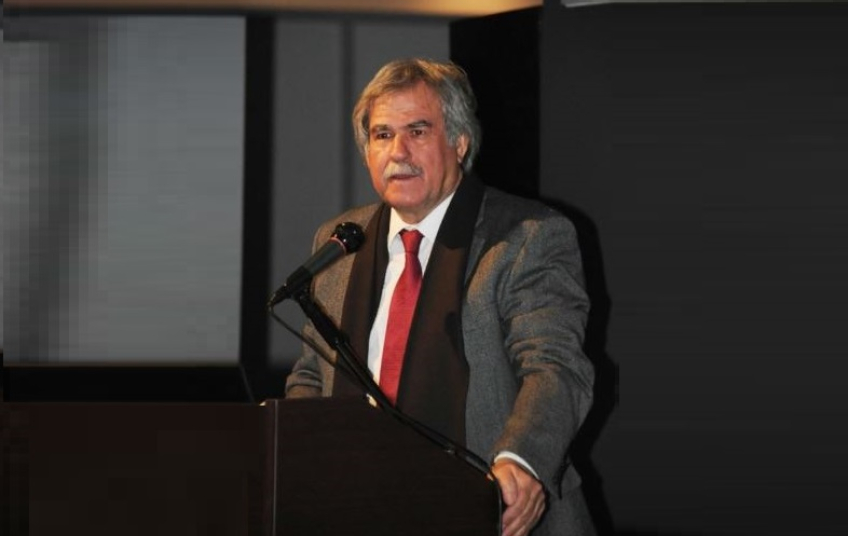
Dr Stavros Avgoloupis
Professor Stavros Avgoloupis began his research at Stephanion Observatory in 1979, carrying out the observational work for his doctoral dissertation there. This marked the beginning of a long association with the Observatory and its research activity…
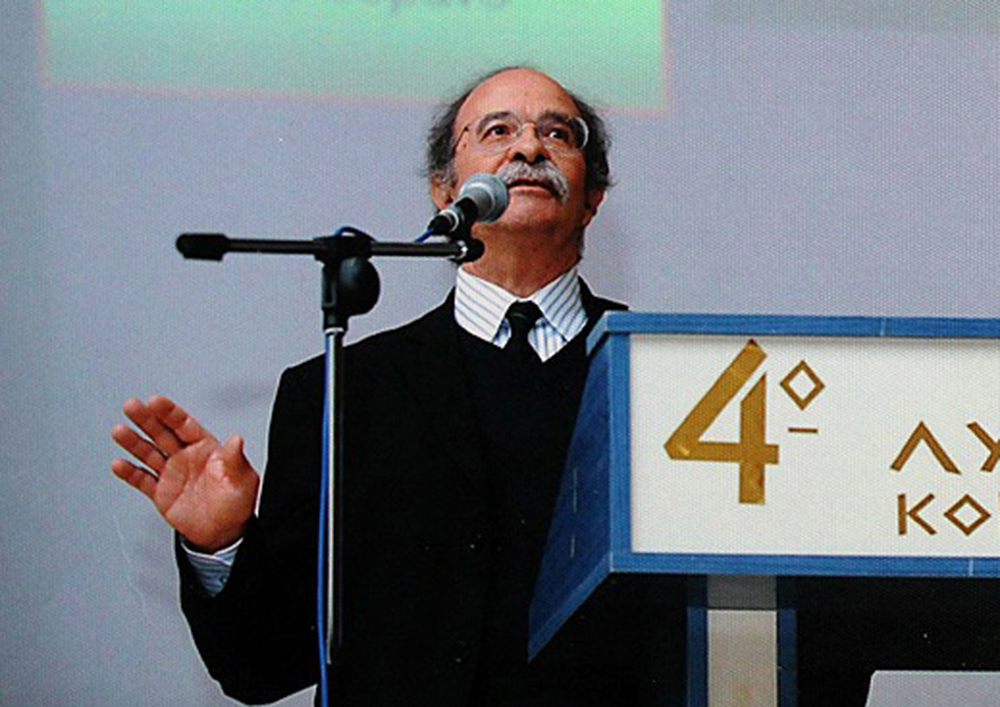
Dr John H. Seiradakis
Professor John H. Seiradakis (1948–2020) was actively involved in the research activity of Stephanion Observatory from 1985 onwards, when he joined the Department of Physics at the Aristotle University of Thessaloniki…
Publications
For almost four decades, Stephanion Observatory was an active centre of astronomical research, making a significant contribution to the study of variable stars through long-term photometric observations.
The research carried out here by the Aristotle University of Thessaloniki resulted in more than 170 scientific publications and significant international collaborations, establishing Stephanion as one of Greece’s most important historic research observatories.