Saving Stephanion Observatory
Preservation & Restoration
Preservation, Restoration & a New Beginning
Saving Stephanion Observatory
For decades, Stephanion Observatory stood at the centre of important astronomical research, yet its future was far from secure. An unusual ownership situation, the gradual deterioration of its buildings and grounds, and eventually the prospect of losing its historic 30-inch telescope placed the Observatory at risk.
What followed was a long effort involving astronomers and staff from the Aristotle University of Thessaloniki, the local community, the Cultural Association of Stephanion and successive municipal administrations.
The telescope was saved, the Observatory passed into public ownership, astronomy returned to the site, and, between 2020 and 2024, its historic facilities were comprehensively restored.
The story of Stephanion is therefore not simply one of restoration. It is the story of how an Observatory was saved and brought back to life.
Today, Stephanion Observatory stands transformed—a restored scientific landmark where heritage, education, and public outreach come together. What once appeared destined for abandonment has become a welcoming, functional, and inclusive destination, ready to inspire future generations through astronomy, science, and discovery.
RENOVATION (2020-2024)
An Observatory on Private Land
When the Stephanion Observatory was established in 1966, its legal status was unusual from the outset. The land, purchased in 1965 by Professor Lysimachos Mavridis, remained his private property, even as the site developed into a research facility used by Greek and European astronomers.
In 1971, Mavridis granted Aristotle University of Thessaloniki the free use of the Observatory property for a period of twenty years. That same year, the University’s 30-inch (76 cm) Cassegrain telescope was installed at Stephanion and would become the Observatory’s principal scientific instrument for the following decades.
The arrangement created an important distinction: the land and Observatory buildings remained privately owned by Mavridis, while the principal telescope belonged to Aristotle University of Thessaloniki and was operated by its astronomers.
When the twenty-year concession expired in 1991, it was not renewed. Astronomical observations nevertheless continued, and the 30-inch telescope remained in operation at Stephanion. The Observatory had therefore entered an increasingly uncertain situation: a major university research instrument continued to operate within privately owned facilities without a renewed long-term agreement governing the use and future of the site.
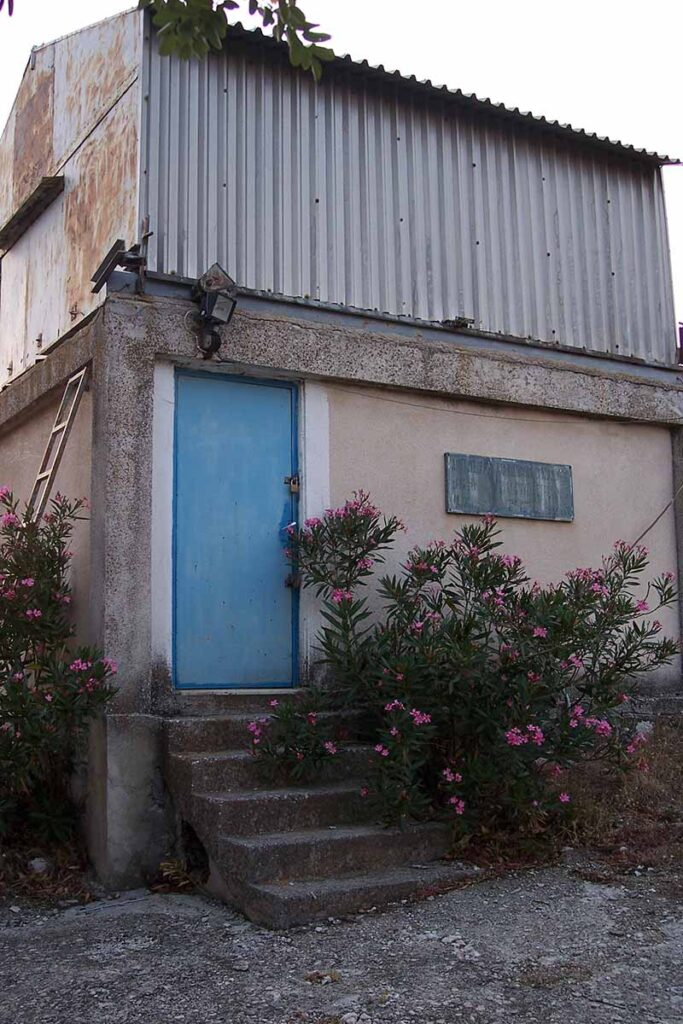
Over the years, attempts were made to secure a more permanent public future for the Observatory, but these did not succeed. At the same time, no effective mechanism was established for the long-term preservation and maintenance of the facilities. As the years passed, the buildings, infrastructure and surrounding grounds gradually deteriorated — even while astronomical observations continued within them. The Observatory remained scientifically active, but the physical conditions necessary to sustain and preserve it were steadily declining.
RENOVATION (2020-2024)
Rediscovering Stephanion’s scientific legacy
In 2004, the Cultural Association of Stephanion began working with astronomers from Aristotle University of Thessaloniki to bring the scientific history and achievements of Stephanion Observatory back into public view.
Although the Observatory and the research carried out there were well represented in the international scientific literature, its contribution to observational astronomy remained little known to the wider Greek public. Decades of observations at Stephanion had contributed to numerous scientific publications and international research programmes, yet this remarkable scientific legacy was largely unfamiliar outside the astronomical community.
The Cultural Association set out to change this. Its website became one of the first places to present the history, instruments and scientific work of the Observatory to a wider audience, while public talks, astronomy lectures and outreach events were organised in Stephanion and Corinth in collaboration with astronomers connected with the Observatory.
These activities gradually reintroduced Stephanion Observatory to the local community and the wider public — not simply as an ageing group of buildings on a hill next to the village, but as an important scientific landmark with a history worth preserving and sharing.
RENOVATION (2020-2024)
The Telescope Must Stay
In 2007, the future of Stephanion Observatory reached a critical turning point. Professor Lysimachos Mavridis asked Aristotle University of Thessaloniki to vacate the property, bringing to an end the University’s long presence at the privately owned site.
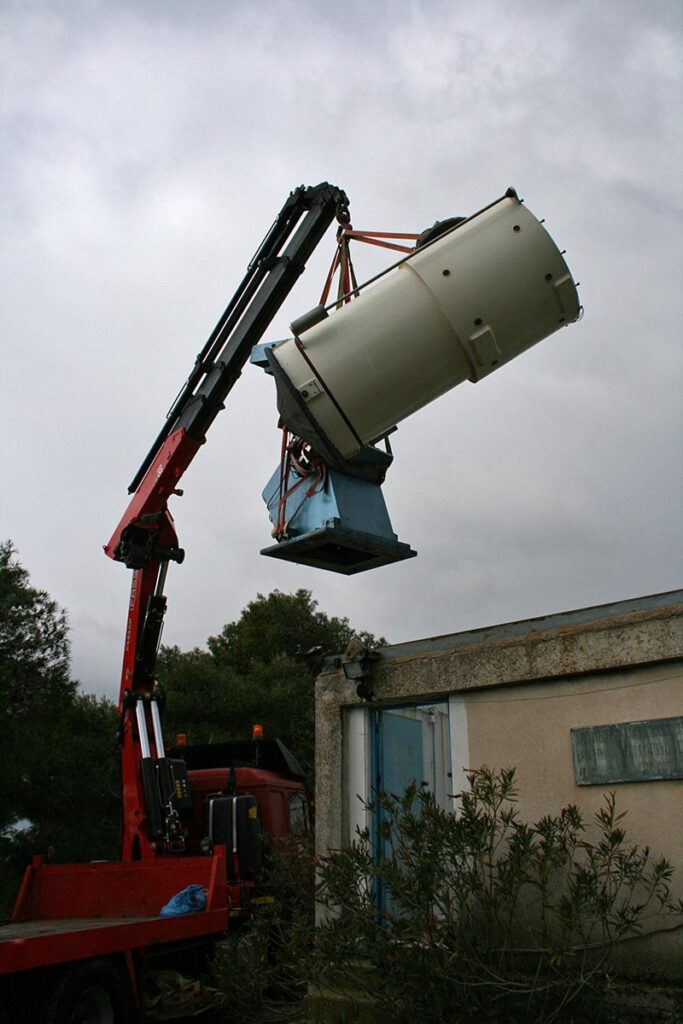
Attempts were made by Aristotle University to reach a new agreement and secure a long-term solution for the continued operation of the telescope, but these efforts were ultimately unsuccessful. By the end of 2008, it had become clear that the University would dismantle its 30-inch Cassegrain and transfer it to Thessaloniki, where it was expected eventually to become a museum exhibit at NOESIS.
For Stephanion, this would have meant losing the instrument that had stood at the heart of its scientific work since 1971 — effectively bringing four decades of observational astronomy on the mountain to an end.
The prospect fundamentally changed the nature of the Cultural Association’s involvement with the Observatory. What had begun as an effort to rediscover and promote its scientific history now became an effort to preserve that history in the place where it had been made.
The Association began campaigning for the telescope to remain in Stephanion and gained the support of the Municipality of Tenea and its Mayor, Christos Chasikidis, who recognised that securing the telescope was the essential first step towards safeguarding the future of the Observatory.
Chasikidis travelled to Thessaloniki and entered into discussions with Aristotle University. The outcome was decisive: an agreement was reached that would allow the historic 30-inch Cassegrain to remain in Stephanion rather than being permanently transferred to Thessaloniki.
The telescope had been saved for Stephanion. Saving the Observatory itself would prove to be the next challenge.
RENOVATION (2020-2024)
Saving the Observatory
With the future of the 30-inch Cassegrain secured, Mayor Christos Chasikidis began negotiations to acquire the privately owned land and buildings, with the aim of bringing the Observatory into public ownership and eventually returning the telescope to its original home.
The negotiations had not resulted in an acquisition when, in 2010, the Kallikratis administrative reform fundamentally reorganised local government in Greece. The Municipality of Tenea ceased to exist as an independent municipality and became part of the enlarged Municipality of Corinth, bringing the ongoing efforts to acquire the Observatory to a temporary halt.
The newly enlarged Municipality of Corinth was initially hesitant to proceed with the acquisition, and the future of the site once again became uncertain.
Professor Lysimachos Mavridis passed away in 2011, with the property still in private ownership and no agreement yet in place for its acquisition by the Municipality.
The telescope was safely stored in Stephanion, waiting to return. But first, a new case had to be made for the future of the Observatory.
RENOVATION (2020-2024)
Stephanion Observatory becomes public property
In July 2011, Patricia van der Wal of the Cultural Association of Stephanion drew up a comprehensive proposal for the development and future use of Stephanion Observatory. The proposal set out a practical vision for the site: acquisition of the property by the Municipality, preservation of its historic scientific infrastructure, return of the 30-inch telescope, and development of the Observatory as a centre for astronomy, education and public engagement.
The initiative received broad support and was co-signed by members of the local community, representatives of cultural and educational institutions of Corinth, and scientists connected with the Observatory, including Professor Giannis Seiradakis and Dutch astronomer and former NESOS researcher Peter B. van der Wal.
The proposal was presented to Mayor Alexandros Pnevmatikos, who was convinced of the potential of the Observatory and agreed to pursue its acquisition.
Negotiations followed with Nikolaos Mavridis, son and heir of Lysimachos Mavridis, who supported the plan for the preservation and future development of the Observatory.
In 2013–2014, an agreement was reached and the Municipality of Corinth acquired the Observatory land and buildings from Nikolaos Mavridis for €95,000, finally bringing the site into public ownership.
RENOVATION (2020-2024)
Astronomy returns to the Observatory
Long before the comprehensive restoration began, Stephanion had already come back to life. From 2014 onwards, public observing nights brought hundreds of visitors to the Observatory during the summer months, demonstrating both the public interest in the site and its potential as a centre for astronomy outreach.
RENOVATION (2020-2024)
The 30-inch comes home
With financial support from the Municipality of Corinth, the Cultural Association restored the 30-inch telescope building.
Then, with technical assistance from Aristotle University of Thessaloniki, the telescope that had been removed in 2009 was finally reinstalled in its historic home.
Mayor Alexandros Pnevmatikos then approved the purchase of two new telescopes.
The Municipality began to invest in Stephanion as an active astronomical facility.
Slide 1
Click here to change this text. Lorem ipsum dolor sit amet, consectetur adipiscing elit. Ut elit tellus, luctus nec ullamcorper mattis, pulvinar dapibus leo.
Slide 2
Click here to change this text. Lorem ipsum dolor sit amet, consectetur adipiscing elit. Ut elit tellus, luctus nec ullamcorper mattis, pulvinar dapibus leo.
Slide 3
Click here to change this text. Lorem ipsum dolor sit amet, consectetur adipiscing elit. Ut elit tellus, luctus nec ullamcorper mattis, pulvinar dapibus leo.
RENOVATION (2020-2024)
A New Chapter
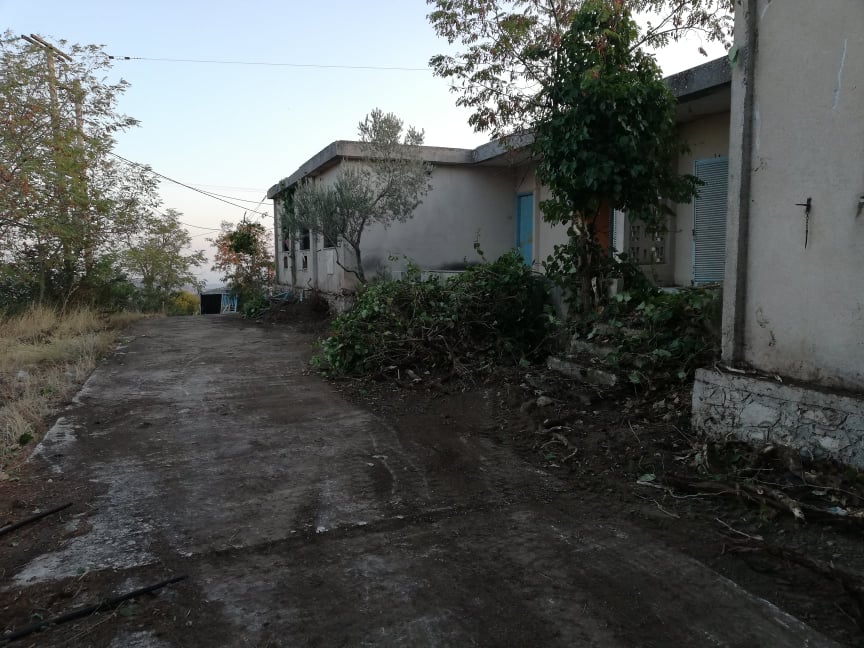
Between 2020 and 2024, the Stephanion Observatory underwent its first major renovation since its establishment in 1966. After more than five decades with virtually no substantial maintenance, the buildings had deteriorated severely. Corroded metal roofs allowed rain and wind to penetrate the structures, damaging ceilings, floors, and interiors. Cracked walls, warped doors, and aging infrastructure left parts of the facility in an increasingly fragile condition.
The surrounding grounds had also become heavily overgrown. Dense pine trees and thick underbrush concealed much of the observatory, while pathways and service areas had disappeared beneath decades of unchecked vegetation, making access difficult and limiting the site’s potential.
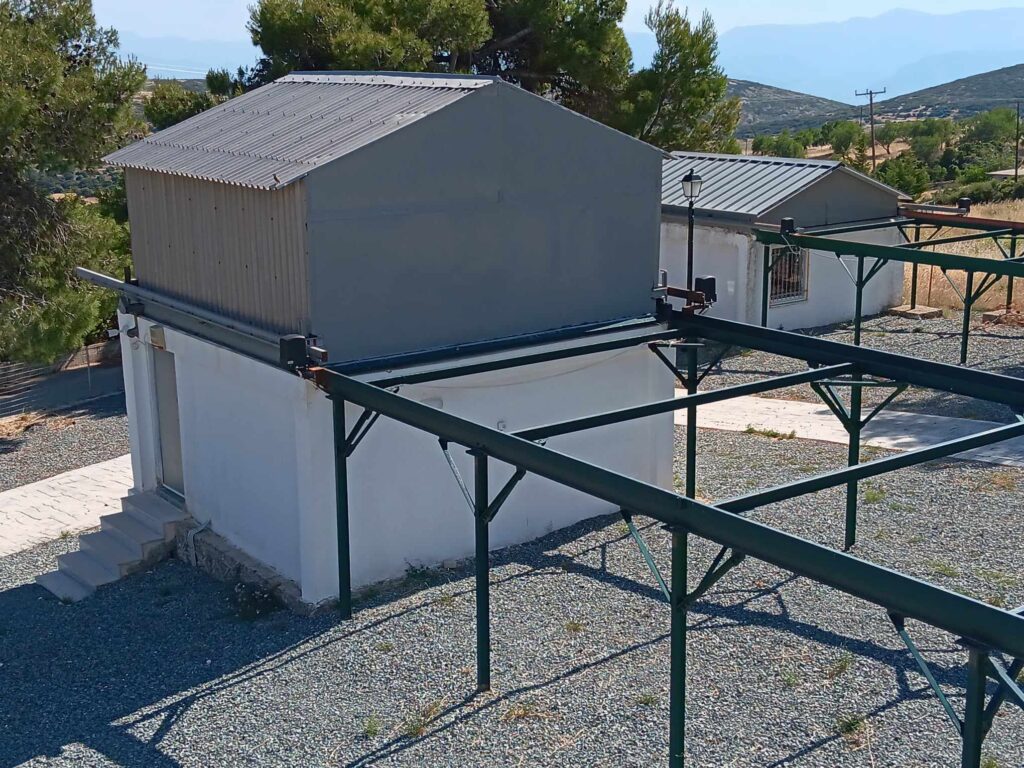
Over four years of careful restoration by the Municipality of Corinth, the observatory was comprehensively revitalized. Buildings were structurally repaired, roofs replaced, utilities upgraded, and the surrounding landscape carefully cleared and redesigned. Open views across Dragatoura Hill were restored, safe circulation was re-established, and the historic character of the site was preserved while preparing it for a new era.
A key aspect of the renovation was accessibility. New level entrances, accessible pathways, ramps, and handrails were incorporated throughout the site, ensuring that visitors with reduced mobility can comfortably experience the observatory and its unique setting.
Today, Stephanion Observatory stands transformed—a restored scientific landmark where heritage, education, and public outreach come together. What once appeared destined for abandonment has become a welcoming, functional, and inclusive destination, ready to inspire future generations through astronomy, science, and discovery.